Semion Mogilevich Net Worth
A fortune investigators describe but have never proven.
Last updated Nov 6, 2026 · 13 min read
Estimated net worth
$10 Billion
USD · As of November 6, 2026
- Source of wealth
- Extortion and protection rackets, Arms trading and the Hungarian armament works, Gas intermediation through RosUkrEnergo, Banking and corporate vehicles such as Inkombank and YBM Magnex, Fuel tax fraud across Central Europe
- Nationality
- Ukraine
- Estimate
- Historical estimate by Net Worth Watch
What is Semion Mogilevich's net worth?
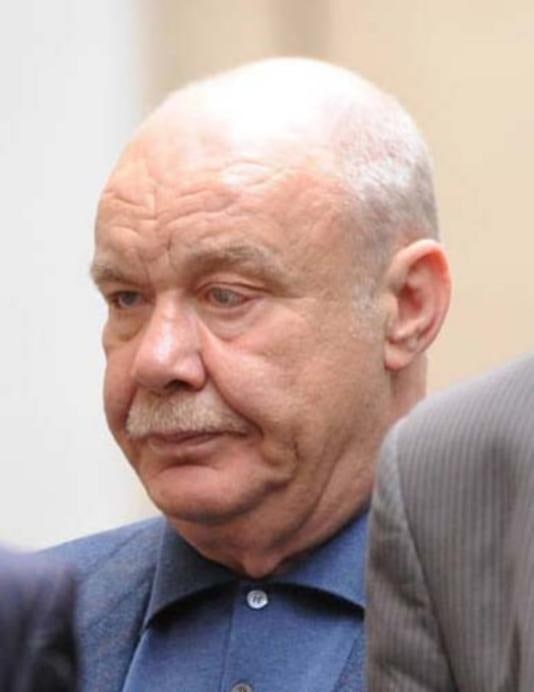
Semion Mogilevich is reported to be worth about $10 billion, a figure carried on this page as reported wealth with a valuation date of 6 November 2026. The number is not the product of a balance sheet. It is an estimate assembled from the descriptions of investigators, prosecutors and journalists who have tracked him since the 1980s, and it should be read on exactly that basis.
In one paragraph, the figure stands for the value of an international criminal operation rather than for a portfolio of shares. According to investigators, that operation has touched gas intermediation between Russia and Ukraine, a private bank in Moscow, an armaments factory in Hungary, public companies in Canada and the United States, and a long record of extortion and money laundering across Russia, Ukraine and Central Europe. None of it has been reduced to audited accounts. He has denied specific allegations through lawyers, including any link to the gas intermediary RosUkrEnergo.
The estimate is plainly an estimate. No court has established the size of his wealth, no regulator has published a figure for it, and he has never been convicted in the United States of the charges that placed him on the FBI Ten Most Wanted list. What follows sets out what the record supports, what it does not, and where the $10 billion comes from.
How the fortune was built
Mogilevich was born on 30 June 1946 in Kyiv, in the Podil neighbourhood, to a Jewish family, and he graduated in economics from the University of Lviv. His first significant fortune, as the record describes it, came from defrauding fellow Soviet Jews who wanted to emigrate. According to reports, he acted as an intermediary for families leaving Kyiv in the 1980s, agreeing to sell their jewellery and artwork at fair market value and forward the proceeds. He sold the assets and kept the money. He served two prison terms, of three and four years, for currency dealing offences.
By the 1980s, according to the FBI, he was the key money laundering contact for the Solntsevskaya Bratva, the Moscow syndicate that became one of the most powerful in Russia. He briefly lived in Israel in 1990. In early 1991 he moved to Hungary, married his Hungarian girlfriend Katalin Papp and acquired a Hungarian passport through the marriage. From a fortified villa outside Budapest he kept investing, and he bought a local armament factory, Army Co-Op, which produced anti-aircraft guns.
In the early 1990s he was among the early investors who bought an apartment in Trump Tower in New York, part of a wave of purchases by buyers with ties to Russian organised crime. In 1993, according to FBI reports, he met Salvatore De Falco of the Giuliano clan of the Camorra in Prague. The decisive step came in 1994, when his group obtained control of Inkombank, one of the largest private banks in Russia, in a secret deal with its chairman Vladimir Vinogradov. That gave him direct access to the world financial system. The bank collapsed in 1998 under suspicions of money laundering.
In May 1995 Czech police raided a meeting in Prague between Mogilevich and Sergei Mikhailov, head of the Solntsevskaya Bratva, held at a birthday party in the restaurant U Holubu, which Mogilevich owned. Police had been tipped off that the Solntsevo group intended to execute him over a disputed payment of $5 million. He never arrived, and it is believed that a senior Czech police officer working with the Russian mafia had warned him. Two hundred partygoers were detained and thirty expelled. The Czech interior ministry then imposed a ten year entry ban, Hungary declared him persona non grata and Britain barred him as one of the most dangerous men in the world.
Between 1997 and 1998 Canadian journalists exposed the presence of Mogilevich, Mikhailov and other Russian mafia associates behind YBM Magnex International, a public company on the Toronto Stock Exchange. On 13 May 1998 FBI agents and several other US agencies raided its headquarters in Newtown, Pennsylvania. Shares in a company that had been valued at $1 billion on the exchange became worthless overnight.
Until 1998, according to the reporting around the case, Inkombank and Bank Menatep took part in a money laundering scheme of about $10 billion that ran through the Bank of New York. He was also suspected in a large fuel tax fraud in which highly taxed car fuel was sold as untaxed heating oil, a scandal that broke around 1990 and 1991. Estimates suggested that up to one third of fuels sold went through the scheme, and in the Czech Republic the loss to taxpayers was put at around 100 billion CZK, roughly $5 billion. The affair involved murders and an attempt on the life of a journalist writing about it.
In 2003 the FBI placed him on its wanted list over the YBM Magnex fraud, having failed to charge him over arms trafficking and prostitution. In the years that followed, US diplomatic cables described him as controlling RosUkrEnergo, the intermediary at the centre of successive Russia-Ukraine gas disputes, alongside his partner Ivan Gordiyenko.
Assets and holdings
There is no visible holding company, no published share register and no portfolio that can be totted up. What investigators describe instead is a set of operating interests held through other people, layered companies and, in several cases, structures that no longer exist. That is the central difficulty with the $10 billion figure: the structure is the fortune, and the structure is largely opaque.
The assets most often named fall into four groups. First, the gas intermediary RosUkrEnergo, which US diplomatic cables describe him as controlling; he has denied any link through a lawyer. Second, banking and corporate vehicles: Inkombank, controlled from 1994 until its collapse in 1998, and YBM Magnex International, the Toronto-listed company valued at $1 billion whose shares became worthless after the 1998 raid. Third, physical and industrial property: the Army Co-Op armament factory in Hungary, the fortified villa outside Budapest, the restaurant U Holubu in Prague, and the apartment in Trump Tower bought in the early 1990s. Fourth, the network of alliances themselves, with the Solntsevskaya Bratva, the Camorra and, per prosecutors, various financial intermediaries.
What cannot be established is what he owns today. None of the named companies is currently attributed to him in any public filing. Investigators have described his interests as being held through nominees and associates, including his partner Ivan Gordiyenko in the gas business and Ivan Fursin, who has been closely linked to him. Where he lives, and what he controls from there, rests on the assertions of the agencies pursuing him rather than on anything he has confirmed.
Income and the scale of the operations
The cash came from several lines at once, which is why the total is so hard to size. The earliest was straightforward fraud against emigrating families, followed by extortion and protection payments channelled through the Solntsevskaya Bratva, for whom the FBI says he was the principal money laundering contact in the 1980s. The second was the fuel tax fraud, where the margin was the difference between the tax on car fuel and the tax on heating oil, multiplied across four countries and, by some estimates, a third of the fuel sold.
The third was banking. Control of Inkombank from 1994 gave the group access to the world financial system at a time when Russian private banks moved large sums offshore with little supervision. The Bank of New York scheme reported at up to $10 billion describes the volume of money that passed through, not his own income, and that distinction matters for anyone reading the $10 billion wealth figure: the two numbers are the same size by coincidence and are not the same thing.
The fourth was gas. A intermediaries position between Russian supply and Ukrainian and European demand produces revenue on every cubic metre transited, and a share of that flow would dwarf the earlier rackets. The fifth was arms, through the Hungarian factory and the brokerage that investigators say continued through the 1990s.
Where the money went
The record shows large sums lost, frozen or spent rather than accumulated in one place. Inkombank, the group's gateway to international finance, collapsed in 1998 under money laundering suspicions. In the same year YBM Magnex shares went from a $1 billion valuation to worthless in a single morning after the raid in Pennsylvania, destroying the value of a company the group was associated with. Whatever stake he held in either vehicle is not recorded as recovered.
The entry bans cost him the West. After the Prague raid of 1995 and the exposure of the Toronto company, he and Mikhailov stopped travelling to Western countries in the late 1990s, which closed the easiest routes for moving and spending money. According to reporting, he retreated to Russia and Ukraine, where his protection was strongest and where the gas business was conducted.
Money also went into legal defence. William S. Sessions, director of the FBI from 1987 to 1993, was his attorney in the United States until Sessions died on 12 June 2020, an arrangement that speaks to sustained spending on counsel. The Czech fuel scandal cost that country's taxpayers around $5 billion, a loss that was never recovered from him. He was released on bail in 2009 after a Russian tax evasion arrest, so no penalty from that case was publicly collected. And the disputed $5 million payment that nearly cost him his life in Prague in 1995 shows how much cash was moving between partners outside any accounting.
What the records actually show
The documents that exist are law enforcement documents, not financial ones. There is the FBI Ten Most Wanted entry, opened on 22 October 2009 when he became the 494th fugitive listed, and closed in December 2015 when the Bureau said he no longer met the criteria, for reasons relating to his living in a country with which the United States has no extradition treaty. There is the State Department reward of up to $5 million announced on 6 April 2022 for information leading to his arrest or conviction. There are the US diplomatic cables that describe him as controlling RosUkrEnergo, a New York court document from 2000, and the testimony given to the US Senate by an FBI assistant director.
Add Canadian journalism that exposed the ownership of YBM Magnex, and testimony from Thomas Renyi, then chief executive of the Bank of New York, given in 1999. None of these sources states a net worth. The nearest thing to a figure is the $10 billion attached to the Bank of New York laundering scheme, which is a measure of flows through the banking system, and the $1 billion valuation of YBM Magnex, which was a market capitalisation that went to zero.
So the $10 billion is an inference, drawn from the scale of the operations rather than from any inventory of assets. What cannot be verified is the current ownership of anything, his present income, his residence, or whether he still exercises control over the gas and financial interests attributed to him. Prosecutors have alleged much; no court has established it.
How that compares
Two other figures on networth.watch sit in the same category. Pablo Escobar is carried at about $30 billion, a figure tied to the peak years of the Medellin cartel, when cocaine revenue arrived in physical cash faster than it could be counted. Dawood Ibrahim is carried at about $6.7 billion, a figure attached to the D-Company network of extortion, betting and smuggling that he is accused of directing from Karachi.
Mogilevich's $10 billion sits between them, and it is the least documented of the three. Escobar's number can be reasoned about because the product was a commodity with a price and a volume. Ibrahim's rests on a network whose activities, while alleged rather than adjudicated, are at least described in detail by the agencies designating him. Mogilevich's rests on gas transit volumes, bank balances that no longer exist and companies that were wound up or rendered worthless.
The comparison also shows the difference in kind. Escobar and Ibrahim built organisations around moving goods and collecting rents. Mogilevich's alleged fortune was built around moving money and owning the intermediary, which makes it larger in ambition, smaller in proof and far harder to place a number on.
Net worth milestones
- 1980s: builds his first fortune by selling the jewellery and artwork of emigrating Soviet Jews and keeping the proceeds, then serves two prison terms of three and four years for currency dealing offences.
- 1991: moves to Hungary, marries Katalin Papp, acquires a Hungarian passport and buys the Army Co-Op armament factory, which produced anti-aircraft guns.
- 1994: his group takes control of Inkombank, one of Russia's largest private banks, in a secret deal with chairman Vladimir Vinogradov.
- 1998: on 13 May FBI agents raid YBM Magnex in Pennsylvania and shares valued at $1 billion on the Toronto exchange become worthless overnight; Inkombank collapses the same year.
- 2009: released on bail in Moscow on 24 July after a tax evasion arrest, and named to the FBI Ten Most Wanted list on 22 October as its 494th fugitive.
- 2022: on 6 April the FBI and State Department announce a reward of up to $5 million for information leading to his arrest or conviction.
Legal history and later life
His only recorded convictions are Soviet era. He served two prison terms, of three and four years, for currency dealing offences, and those remain the sole occasions on which a court is known to have ruled against him. Everything else in the file is allegation, charge or investigation.
In 2003 the FBI placed him on its wanted list over the fraud against investors in YBM Magnex International, after earlier efforts to charge him with arms trafficking and prostitution had failed. He was arrested in Moscow on 24 January 2008 on suspicion of tax evasion and released on bail on 24 July 2009. On his release the Russian interior ministry said the charges against him were not of a particularly grave nature, and the case did not produce a conviction. The Bureau placed him on the Ten Most Wanted list in October 2009 and removed him in December 2015, explaining that he no longer met the criteria because he was living in a country with no extradition treaty with the United States.
Europe moved earlier. The Czech interior ministry imposed a ten year entry ban after the 1995 Prague raid, Hungary declared him persona non grata, and Britain barred his entry, calling him one of the most dangerous men in the world. In 2010 Oleksandr Turchynov, later acting president of Ukraine, appeared in court accused of destroying files relating to Mogilevich, a case that illustrated how politically entangled the file had become. Alexander Litvinenko, the FSB defector, claimed before his assassination that Mogilevich had a good relationship with Vladimir Putin from the 1990s, a claim that has never been substantiated in any court.
He is alive and was 80 in June 2026. FBI and State Department material describes his residence as Moscow, a detail that has not been independently confirmed. The reward announced in April 2022 remains the standing US position. No US court has tried him, no international tribunal has ruled on the allegations, and the underlying claims about his wealth and his operations remain what investigators say they are.
Frequently asked questions
Is Semion Mogilevich really worth $10 billion? That is the reported figure carried here, dated 6 November 2026, and it is an estimate rather than an audited sum. It is inferred from the scale of the operations that investigators describe, including gas intermediation, banking, the Hungarian armaments factory and large scale money laundering. No court has established the size of his wealth, and no financial statement supporting it has ever been published.
Has he ever been convicted of anything? Yes, but only in the Soviet period, when he served two terms of three and four years for currency dealing offences. He was charged in the United States over the YBM Magnex fraud and placed on the FBI Ten Most Wanted list, but has never been tried there. A Russian tax evasion case led to his arrest in 2008 and release on bail in 2009 without a conviction.
Where is he now? FBI and State Department material gives his residence as Moscow, and he was 80 years old in June 2026. That location has not been independently confirmed, and he has not travelled to the West since the late 1990s, when several countries barred his entry. The United States offers up to $5 million for information leading to his arrest or conviction.
How did he make his money? Investigators trace it from fraud against emigrating Soviet Jews in the 1980s, through extortion and money laundering for the Solntsevskaya Bratva, into fuel tax fraud across Central Europe, control of Inkombank from 1994, the YBM Magnex affair and gas intermediation through RosUkrEnergo. He has denied the RosUkrEnergo link through a lawyer, and no court has ruled on the wider allegations.
Why is the figure so uncertain? Because the assets were held through nominees, layered companies and vehicles that no longer exist. Inkombank collapsed in 1998, YBM Magnex shares became worthless the same year, and nothing named in the public record is currently attributed to him in a filing. The number is therefore a judgement about the scale of an operation, not a valuation of a portfolio.