Pablo Escobar Net Worth
The fortune behind the Medellin cartel, and what it cost.
Last updated Nov 6, 2026 · 11 min read
Estimated net worth
$30 Billion
USD · As of November 6, 2026
- Source of wealth
- Cocaine trafficking to the United States, Medellín Cartel distribution network, Bahamas trans-shipment route at Norman's Cay, Property, land and aircraft, Cash held through relatives and front men
- Nationality
- Colombia
- Estimate
- Historical estimate by Net Worth Watch
What is Pablo Escobar's net worth?
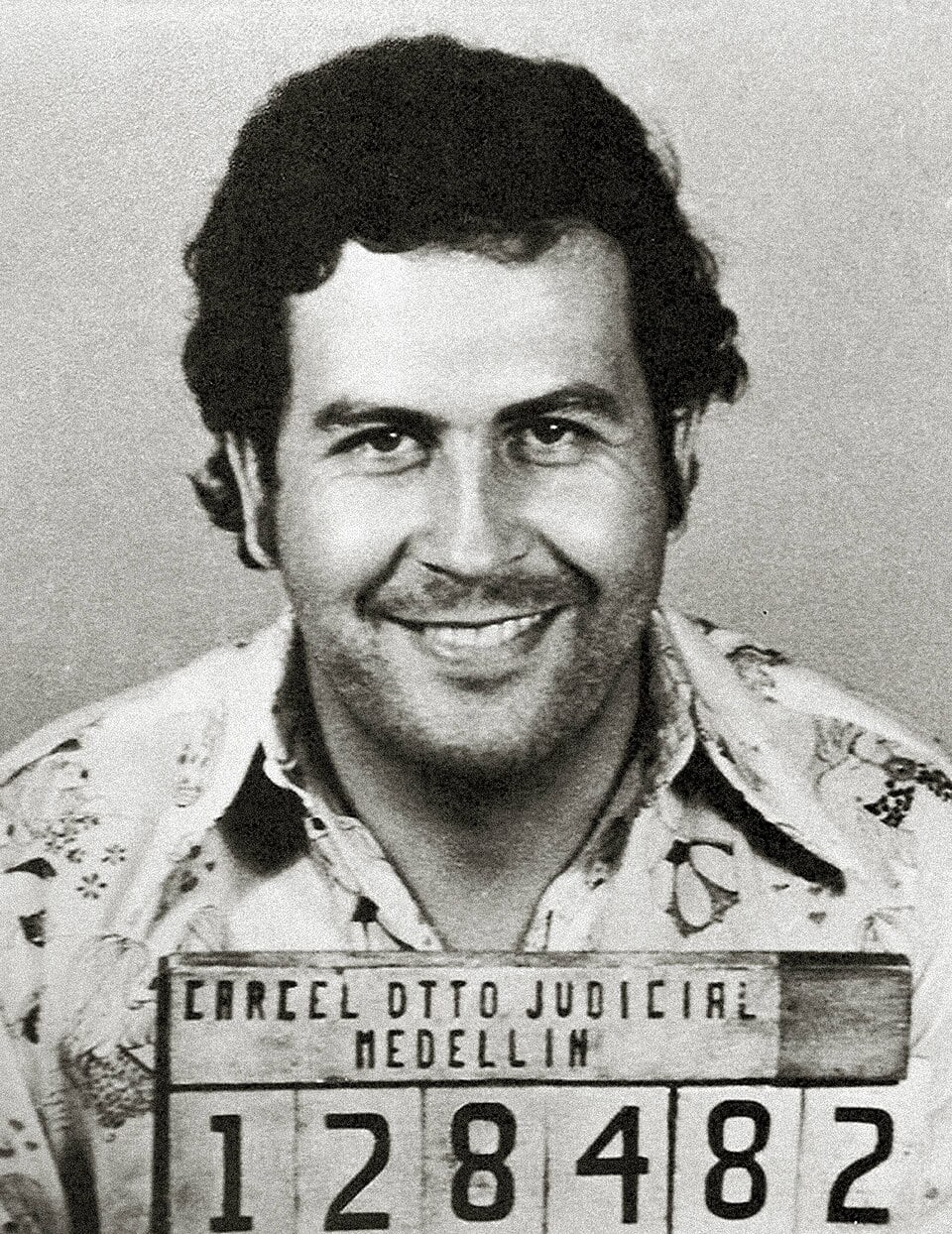
Pablo Escobar had an estimated net worth of $30 billion at his peak in the early 1990s, carried here to the valuation date of 6 November 2026. It is the number attached to the end of his life: Wikipedia records an estimated net worth of US$30 billion amassed by his death on 2 December 1993, when the Medellín Cartel he founded still dominated the cocaine trade into the United States.
What it consists of is unusual. There was no listed company, no share register and no audited balance sheet. The estate was a mixture of cocaine revenue still in circulation, property in Colombia and Florida, aircraft, boats, a Bahamas trans-shipment point, a ranch of about 20 square kilometres with its own zoo, and cash held through relatives, front men and lawyers. Almost none of it was valued by anyone with access to accounts, because there were no accounts in any conventional sense of the word.
It is an estimate. A fortune of this size cannot be reconciled line by line, the assets were largely seized, spent or abandoned after 1993, and different accounts of cartel turnover produce different totals. No probate inventory was published, so the number cannot be tested against what he left.
How the fortune was built
Pablo Emilio Escobar Gaviria was born on 1 December 1949 in Rionegro, Antioquia Department, the third of seven children of a small farmer and a teacher, and grew up poor in Medellín. He dropped out of high school in 1966, returned with his cousin Gustavo Gaviria, and left again. His gang stole tombstones, sandblasted off the inscriptions and resold them, then moved into stealing cars and, by the early 1970s, kidnapping for ransom. His best known victim was the businessman Diego Echavarría, taken in 1971 and killed, with a $50,000 ransom paid to the gang.
Cocaine changed the scale. Escobar had been in organised crime for a decade when the trade spread through Colombia in the mid-1970s, and in 1976 he founded the Medellín Cartel, which opened the first routes from Peru, Bolivia and Ecuador through Colombia into the United States. That year the security service DAS arrested him on his return from Ecuador with 39 kg of cocaine in his spare tyre. He changed the first judge, bribed the second and walked out; the agent who arrested him was assassinated the next year. The technique became policy, known as silver or lead, money or death.
The expansion was fast. After a meeting with other traffickers on a farm in April 1978, the organisation moved some 19,000 kilograms of cocaine to the United States by the end of that year. Escobar worked with the co-founder Carlos Lehder on a trans-shipment point at Norman's Cay in the Bahamas, an island about 350 km southeast of Florida with a one kilometre airstrip, a harbour, boats and aircraft, plus a refrigerated cocaine warehouse. It carried cartel traffic from 1978 to 1982. His brother Roberto later said the island was Lehder's venture alone, and Robert Vesco is recorded as the other land buyer there.
The profits bought land. Escobar paid several million dollars for 20 square kilometres in Antioquia and built Hacienda Nápoles, with a colonial house, a lake, a sculpture garden, a bullring and a zoo stocked with animals from several continents. He organised further shipments and distribution in South Florida, California and Puerto Rico, and by the 1980s he was estimated to send 70 to 80 tons into the United States every month.
Politics came next. In the 1982 parliamentary election he won an alternate seat in the Chamber of Representatives for the Liberal Party, which carried immunity and a diplomatic passport, and he spent on housing, parks, football pitches, hospitals, schools and churches in poor neighbourhoods. The justice minister Rodrigo Lara-Bonilla accused him in Congress, the party expelled him, and he retired from politics in January 1984. Lara-Bonilla was murdered three months later.
Assets and holdings
There was no holding company at all. What investigators and later writers describe is a personal estate held in his own name where he could get away with it and through relatives, front men and lawyers where he could not. The clearest structure was physical: land, buildings, aircraft and boats.
Hacienda Nápoles was the centrepiece, 20 square kilometres in Antioquia bought for several million dollars and developed with a zoo, a lake, a sculpture garden and a bullring. Escobar also owned a 6,500 square foot pink waterfront mansion at 5860 North Bay Road in Miami Beach, held in his own name, which the US federal government seized in the 1980s. He held a large Caribbean compound on Isla Grande in the Islas del Rosario, about 35 km from Cartagena, with a mansion, apartments, a pool and a helicopter landing pad. In Medellín he built the six storey Edificio Mónaco complex in El Poblado, intended for his wife, which a Cali Cartel car bomb gutted in 1988.
Logistics assets mattered as much as property. The cartel ran aircraft, boats and a refrigerated warehouse at Norman's Cay, and it maintained laboratories and a paid staff described in the article as handsomely rewarded. Escobar also held official goodwill bought with cash, which functioned as an asset until it did not.
After his death the state applied the Extinción de Dominio law and handed the ranch and its zoo to low income families. The property is now a theme park surrounded by four luxury hotels.
Income and the scale of the operations
The income was cocaine, sold wholesale into the United States. Wikipedia gives the two figures that anchor the scale: some 19,000 kilograms moved to the US in the single year after the April 1978 meeting, and, by the 1980s, an estimated 70 to 80 tons shipped every month. On any reading of the second number, annual turnover ran into the tens of billions of dollars at street values, which is why a $30 billion personal estimate was taken seriously at the time.
Cash flow, not profit, was the operating reality. Escobar paid for cocaine in source countries, paid pilots, crews and warehouse staff, paid for aircraft and fuel, and paid the bribes that kept routes open. He also paid for political campaigns: the article records that the Medellín and Cali cartels financed candidates from both the Conservative and Liberal parties, and that his own spending in 1982 bought him a seat and immunity.
No annual revenue figure has ever been published by anyone who had access to cartel accounts. The tonnage estimates come from investigators, and the price and margin assumptions behind any dollar conversion vary widely, so the same trade produces revenue totals that differ by tens of billions.
Where the money went
Most of it went back out. The article records millions spent on Medellín's poorest neighbourhoods, on housing complexes, parks, football stadiums, hospitals, schools and churches, a programme that produced the Paisa Robin Hood reputation and, in the government's view, protection. He also paid for La Catedral, the prison built to his own specification, with a football pitch, a bar, a Jacuzzi and a waterfall. Bribes to judges, officials and candidates were a standing cost of doing business.
Seizure took the rest, slowly. The Miami Beach mansion was seized by the US federal government in the 1980s. After 1993 the Hacienda Nápoles estate passed to the state under Extinción de Dominio and was distributed to low income families; the Edificio Mónaco stood empty and was demolished by Medellín authorities on 22 February 2019. The Cali Cartel demanded and received millions in reparations from Escobar's family for his war against it.
The family's finances were pursued for decades. Escobar's widow spent eighteen months in an Argentine prison while her funds were investigated, and authorities could not link them to illegal activity. On 5 June 2018 an Argentine federal judge accused her and her son of money laundering and ordered the seizure of assets worth about $1 million each.
What the records actually show
The $30 billion is a reference figure, not a finding. Wikipedia states it in the opening paragraph as an estimate of what Escobar had amassed by his death, and the number recurs across reference works and documentaries without a published derivation. No balance sheet, tax return or audited inventory of the estate supports it. The only formally documented sums are small by comparison and incidental: a $50,000 ransom in 1971, the several million dollars paid for the Antioquia land, the property seized in Miami.
The record does contain testimony and case files. Escobar's brother Roberto wrote books about him, his son Juan Pablo published Pablo Escobar, My Father in 2014, and Virginia Vallejo, a television anchor involved with him from 1983 to 1987, gave testimony to the Colombian attorney general in 2006 that helped reopen the Galán assassination case. Those accounts are useful on chronology and motive, and weak on arithmetic; none of them totals the estate.
Investigators supplied the tonnage and route figures, and they too are estimates. Turning kilos into a personal fortune requires assumptions about price, costs and Escobar's share, none of them documented publicly, and the estimates that circulate rarely state which assumptions they used.
How that compares
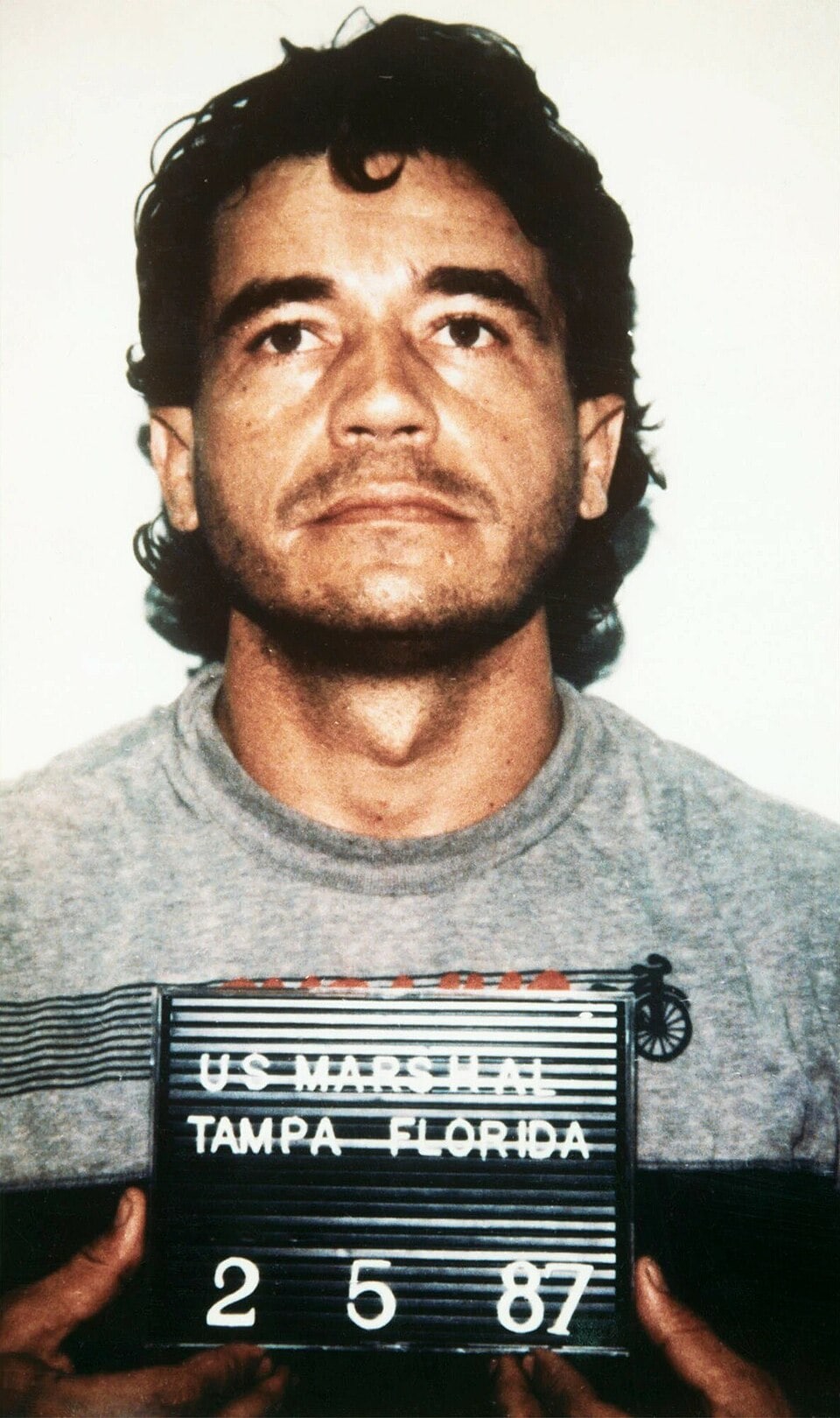
Against other fortunes on networth.watch in the same criminal category, Escobar's figure is the largest. Amado Carrillo Fuentes, who built the Juárez Cartel and its aircraft fleet, is listed at an estimated $25 billion at his peak, close enough that the ranking turns on estimation method rather than on evidence. Carrillo Fuentes ran a logistics empire across the Mexican border; Escobar ran production and the first long haul routes.
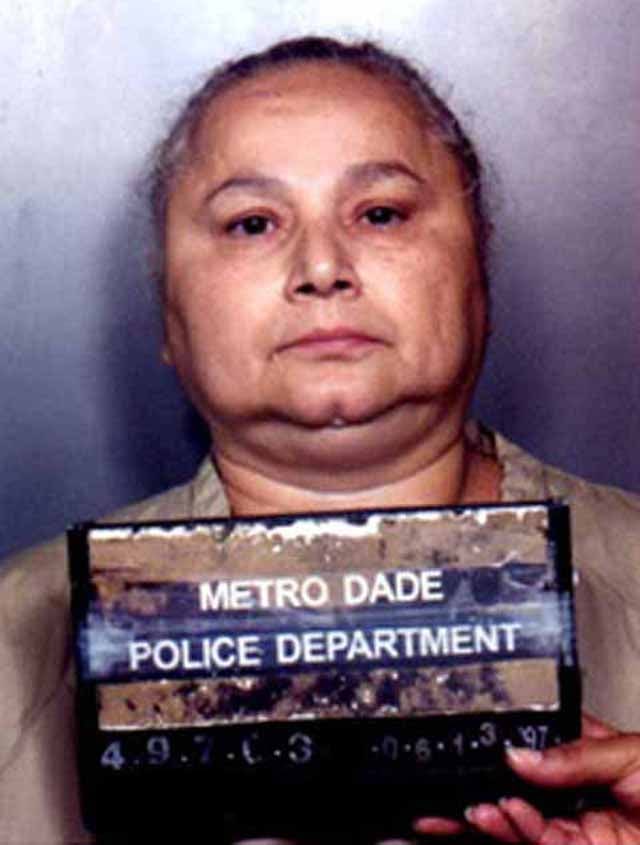
Griselda Blanco, listed at an estimated $2 billion at the height of the Miami cocaine trade in the 1980s, shows the other end of the same business. She operated a distribution network rather than the wholesale supply chain, and the difference between $2 billion and $30 billion reflects position in the trade rather than any difference in method.
The honest comparison is between three estimates built from testimony and enforcement files, not three sets of accounts. Ranking them is reasonable; treating the gaps as precise is not. All three sit far below the largest fortunes on networth.watch, which come from equity in listed companies whose value can be calculated from filings.
Net worth milestones
The dated points below come from Wikipedia's account of Escobar's career. Each is a documented change in what he controlled or lost, not a valuation of the estate at that moment.
- 1971 A $50,000 ransom from the Echavarría family, the first large sum tied to him by name.
- 1976 Arrested with 39 kg of cocaine, then released after changing one judge and bribing another, which set the pattern and the price of doing business.
- 1978 Some 19,000 kilograms shipped to the United States in one year, the point at which the operation became industrial.
- 1982 Elected an alternate member of the Chamber of Representatives, gaining parliamentary immunity and a diplomatic passport.
- 1991 Surrendered under a no extradition deal, was sentenced to five years and held in La Catedral with his assets intact.
- 1993 Killed on 2 December, with an estimated $30 billion amassed and almost none of it ever recovered.
Legal history and later life
Escobar's legal history is a record of cases that failed. He was arrested in May 1976 with 39 kg of cocaine and released after the first judge was replaced and the second bribed. In 1984 the justice minister who had accused him in Congress was murdered. In the Palace of Justice siege of 6 November 1985, in which 98 people died including nearly half the Supreme Court, the article records that Escobar supported the guerrillas who attacked the building and backed the Los Extraditables campaign against extradition.
The escalation is documented: the assassination of the presidential candidate Luis Carlos Galán on 18 August 1989 on Escobar's orders, and the bomb on Avianca Flight 203 that killed all 107 people aboard. In 1991 he surrendered to the Gaviria administration, which had just seen extradition barred by the new constitution, and was sentenced to five years on a host of charges under a deal that let him serve it in La Catedral. He escaped on 22 July 1992 when he learned of a plan to move him.
He was killed on 2 December 1993, a day after his 44th birthday, in a middle class house in Medellín, tracked by special forces using US supplied technology after a call to his family. He was shot on the roof while trying to escape, and whether the head wound was his own or a police bullet has been debated since. Cases continued without him: the former senator Alberto Santofimio was sentenced to 24 years in 2011 for his role in the Galán assassination.
Frequently asked questions
Was Pablo Escobar a billionaire? Yes, by every estimate. Wikipedia puts his net worth at an estimated US$30 billion by the time of his death in 1993, far above the billion dollar line even allowing for wide error. The wealth sat in cash, property, aircraft and cocaine stock rather than in shares, so the label fits the scale of what he controlled rather than any audited sum.
How much did the Medellín Cartel earn? No reliable total exists. The figures quoted are physical: some 19,000 kilograms shipped to the United States in 1978, and an estimated 70 to 80 tons a month by the 1980s. Turning that into revenue requires price and cost assumptions that were never published, so the cartel's annual earnings are unknown and estimates vary widely with the assumed street price.
Where did the money go after his death? Mostly nowhere it could be recovered. The Miami mansion had already been seized in the 1980s, the Hacienda Nápoles estate was handed to low income families under Colombian domain extinction law, and the Cali Cartel took millions in reparations from the family. Prosecutors never produced an estate inventory matching the headline figure, and the family's own finances were later investigated in Argentina without a cartel link being established.
Did Escobar ever go to prison? Once, and on his own terms. He was held after his 1991 surrender and sentenced to five years on a host of charges, serving it in La Catedral, a compound he built with a football pitch, a bar, a Jacuzzi and a waterfall. He escaped on 22 July 1992 when authorities tried to move him to a standard jail, and stayed a fugitive for seventeen months until he was killed in December 1993.
Why is the $30 billion figure disputed? Because it has no published derivation. The tonnage and route numbers come from investigators, the chronology comes from testimony and memoirs, and the dollar total comes from neither. Turning kilos into a personal fortune requires assumptions about price, costs and his share of proceeds, and different assumptions give very different answers to the same question about the same trade.