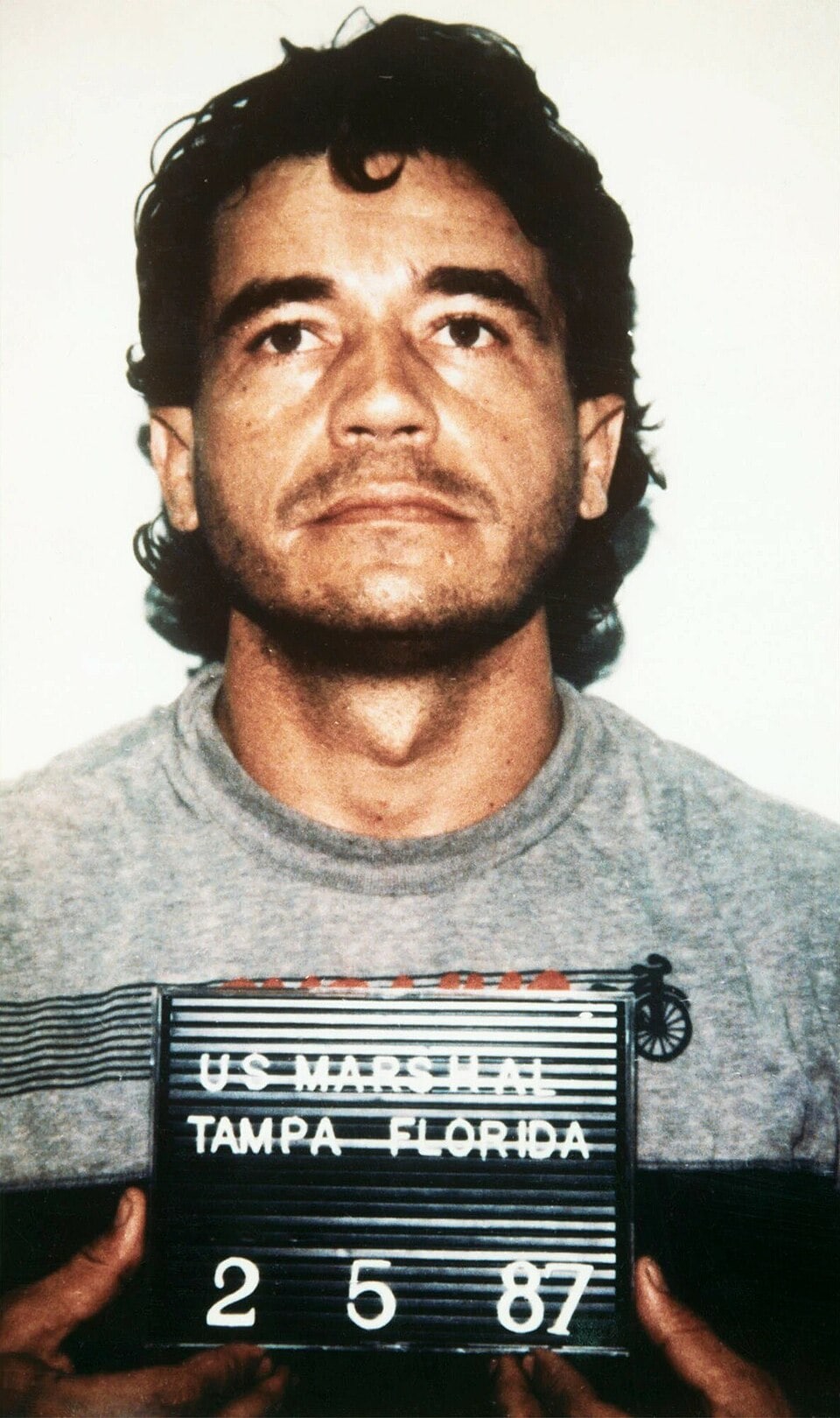
Carlos Lehder Net Worth
The transport man who turned a Bahamas island into a runway.
Last updated Nov 6, 2026 · 11 min read
Estimated net worth
$2.7 Billion
USD · As of November 6, 2026
- Source of wealth
- Cocaine transport fees taken in kind, Norman's Cay island and airstrip, Aircraft fleet, Bahamian bank balances, Colombian hotel, cars and property
- Nationality
- Colombia
- Estimate
- Historical estimate by Net Worth Watch
What is Carlos Lehder's net worth?
Carlos Lehder's net worth is estimated at $2.7 billion, a figure that describes the peak of his fortune in the early 1980s rather than anything he holds today. It is stated on a valuation date of 6 November 2026 as a historical reconstruction, and it is an estimate rather than a balance sheet an accountant ever audited.
The sum consists of what the cocaine air route through Norman's Cay was worth at its height: the transport fee he took in product on every load, the island with its marina and extended airstrip, the aircraft that fed it, and the Bahamian balances and Colombian property those earnings bought. At the peak about 300 kilograms of cocaine arrived on the island each day, and he was believed to keep one kilogram out of every four that passed through.
Almost none of it survived. The Bahamian government froze his accounts and took over his property in 1983, and the record describes him going from billionaire to nearly bankrupt within months. He was then captured, extradited, convicted and held for more than 33 years in US prisons. The $2.7 billion therefore measures a peak that lasted a few years, not a fortune that still exists.
How the fortune was built
Carlos Enrique Lehder Rivas was born on 7 September 1949 in Armenia, Colombia, the third of four sons. His father, Klaus Wilhelm Lehder, was a German engineer who arrived in 1928 and helped build some of the town's first buildings with lifts, taking the name Guillermo Lehder when he married Helena Rivas, a former beauty queen. The family ran a small guesthouse, the Pensión Alemana, and an import business.
His parents divorced when he was 15 and he moved to New York with his mother. He left school and stole cars in the United States and shipped them to Medellín, where his brother sold them. At 24 he took aviation classes and became an expert pilot, running marijuana between the United States and Canada. A federal sentence for car theft at Danbury, Connecticut, supplied the idea that made him rich: his cellmate George Jung had flown marijuana from Mexico below radar, and Lehder decided the method would work for cocaine.
Paroled and deported to Colombia, the pair first paid two young American women to take a holiday in Antigua, collect cocaine and carry it home in their suitcases. The proceeds bought an aircraft, and they began flying loads into the United States through the Bahamas in a small stolen plane while spreading money among Bahamian officials for political and judicial protection.
In 1978 Lehder began buying property on Norman's Cay, an island 210 miles off Florida with a marina, a yacht club, about 100 homes and an airstrip. He is estimated to have spent $4.5 million there. Residents were paid or forced out; at one point a yacht was found drifting offshore with the body of one of its owners aboard. The runway was extended to 3,300 feet and guarded by radar, bodyguards and Doberman attack dogs. Jung was pushed out, and financier Robert Vesco was allegedly brought in as a partner.
From 1978 to 1982 the cay was the Caribbean's main smuggling hub. Loads flew in from Colombia, were reloaded onto smaller planes and went out to Georgia, Florida and the Carolinas. That position made Lehder a founding partner of the Medellín cartel alongside Pablo Escobar, the Ochoa brothers and Gonzalo Rodríguez Gacha, paid in product rather than freight charges.
The money became political. In 1978 he offered to pay off Colombia's external debt to President Alfonso López Michelsen, and in 1982 repeated the offer through Escobar, by then a congressman, to stop his extradition. He used Belisario Betancur's 1982 patrimonial amnesty to legalise his assets, and founded the National Latin Civic Movement at his Posada Alemana hotel, a party police said appeared designed to force Colombia to abandon its extradition treaty.
Assets and holdings
The core asset was Norman's Cay itself: the marina, the yacht club, the roughly 100 homes he bought or forced residents out of, the airstrip extended to 3,300 feet, and the radar and security infrastructure around it. The sources used here describe the island being assembled through purchases in his own name and pressure on residents rather than a holding company, and put the total spent at an estimated $4.5 million.
The second block was aviation. He commanded a mixed fleet, from light aircraft that could use the shortened strip to larger freighters capable of carrying loads in from Colombia. One of them, a Curtiss C-46 Commando, crashed in shallow water off the island in November 1980, and its wreckage was still visible in the shallow water two decades later.
On the Colombian side the visible holdings were the Posada Alemana, the luxury hotel he built in the coffee region on the model of his family's guesthouse, a Piper PA-31 Navajo given to the government of Quindío and sold a year after it was legalised, a limousine that had belonged to a former German chancellor and was fitted with weapons he never used, and a collection of expensive cars. Bahamian bank accounts held the cash proceeds until 1983, when the government froze all of them.
Nothing comparable has been documented since. He holds German nationality through his father and was flown to Germany on his release in 2020, but no public record sets out German holdings or attaches a value to them.
Income and the scale of the operations
Lehder's income was a transport fee, not a wholesale margin. According to investigators, he kept one kilogram out of every four that moved through Norman's Cay, a 25 percent share of every load taken in kind rather than in cash. At the height about 300 kilograms a day arrived on the island, so the product accruing to him ran to tens of kilograms a day, and because the fee was cocaine it had to be sold on before it became aircraft, property or political spending.
What produced the cash each year was the same circuit: cocaine flown in from Colombia, broken down on the cay, reloaded onto smaller aircraft and distributed to Georgia, Florida and the Carolinas. The costs met out of it were continuous, including the fleet, fuel, pilots, upkeep of the strip and the payments to Bahamian officials that kept the arrangement protected. Volume rather than unit price carried the fortune.
The scale shows in two gestures rather than in accounts. He twice offered to settle Colombia's entire external debt, in 1978 and again in 1982. His gift of a modern Piper PA-31 Navajo to the department of Quindío was the visible surface of an income nobody declared.
Where the money went
Most of the outflow was operational and political. The empire ran on payments to Bahamian officials, allegedly including the Prime Minister, Lynden Pindling, and those payments bought the protection that let a foreign airstrip operate as a cocaine terminal for four years. The rest went into the island, at an estimated $4.5 million, into aircraft, and into security after the M-19 guerrillas tried to kidnap him on 19 November 1981: former agents of DAS, Sijin and the army, bodyguards and dogs.
Some of the money was deliberately made visible in Colombia. The Piper Navajo given to Quindío, the Posada Alemana, the cars and the armed limousine were spending designed to be seen, and Betancur's 1982 patrimonial amnesty was used to legalise assets acquired with undeclared money.
The losses were abrupt and total. In 1981 the DEA and the Bahamian police intervened on the island. After Brian Ross's NBC report of 5 September 1983 exposed the bribery, the government froze all his bank accounts and took over his property, and the record describes him as having gone from a billionaire to nearly bankrupt. He was convicted and sentenced to life, but the sources used here set out no separate forfeiture figure.
What the records actually show
The $2.7 billion is a reconstruction built from a volume and a share, and both numbers come from investigators rather than from accounts. No balance sheet or tax filing covering his peak has been published. The two inputs are the traffic through Norman's Cay, about 300 kilograms a day at its height, and the fee of one kilogram in every four, both drawn from the investigation of the operation.
What documents do support is the shape of it. The 1981 intervention on the island, the 1983 television report, the extradition to Jacksonville in 1987, the 1988 conviction and sentence, and the appellate decision in United States v. Lehder-Rivas, 136 Fed. Appx. 324 (2005), are matters of record, as is the 1992 reduction to 55 years for testifying against Manuel Noriega.
What cannot be verified is the size of the fortune. The phrase most often repeated, that his wealth mounted into the billions, is a period description with no attached calculation. The value of the frozen Bahamian balances was never published and the fate of the product he took as fees is unknown. The most concrete anchor is that he went from billionaire to nearly bankrupt, which describes a collapse rather than a number.
How that compares
Among the drug fortunes already on networth.watch, Lehder's $2.7 billion sits between the largest and the merely large. Pablo Escobar is carried at an estimated $30 billion at his peak in the early 1990s, a figure reflecting the Medellín cartel's supply business and the 70 to 80 tons a month attributed to it. Escobar owned the product; Lehder owned the runway and the route, and a quarter of the loads that used it.
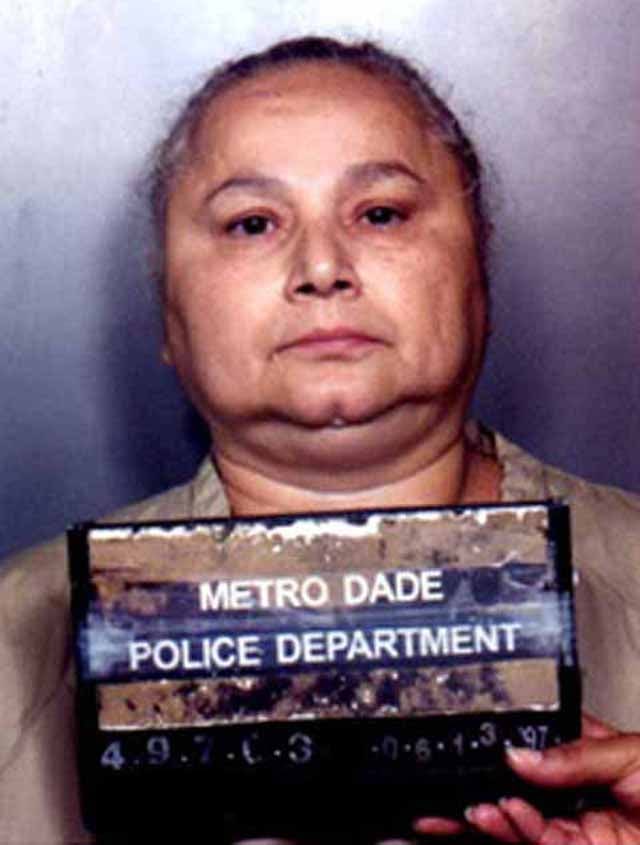
Griselda Blanco, who ran distribution rather than transport, is carried at an estimated $2 billion at her peak, built on a distribution network that supplied New York in the 1970s and Miami in the 1980s, with reported earnings of $80 million a month. Lehder's figure is modestly above hers, which fits his position as a cartel co-founder charging freight on volume rather than a distributor taking a margin at the end of the chain.
The comparison shows what the three numbers share. All are reconstructions of enterprises that kept no accounts, and in each case the recorded wealth was largely gone, seized or never traced by the time the subject was prosecuted.
Net worth milestones
- 1949 Born on 7 September in Armenia, Colombia, into a German Colombian family that ran a guesthouse.
- 1978 Begins buying Norman's Cay in the Bahamas and spends an estimated $4.5 million turning it into a cocaine terminal with a 3,300 foot runway, radar and attack dogs.
- 1981 The DEA and Bahamian police intervene on the island and dismantle the operation; in November an M-19 kidnap attempt fails and he escapes with a leg wound.
- 1982 Traffic peaks at roughly 300 kilograms a day, his wealth is described as reaching the billions, and he offers through Escobar to pay Colombia's external debt.
- 1983 After the NBC report of 5 September, the Bahamas freezes all his bank accounts and takes over his property, and he goes from billionaire to nearly bankrupt.
- 2020 Released from US custody on 16 June after more than 33 years and 4 months, and escorted by two US officials to Germany.
Legal history and later life
Lehder was captured at a farm he had just established in Colombia, after a new employee told the police where he was; a rival account, supported by Escobar's chief assassin Jhon Jairo Velásquez, holds that the cartel gave him up. In 1987 he was extradited to Jacksonville, Florida, the first high-level Colombian trafficker sent to the United States, and held in a courthouse cell under round the clock guard. In 1988 he was convicted and sentenced to life without parole plus 135 years.
In 1992, in exchange for agreeing to testify against Manuel Noriega, the sentence was cut to 55 years. In autumn 1995 he wrote to a federal judge complaining that a promise of transfer to a German prison had been broken, and the letter was read as a threat; he was moved within weeks into witness protection. He appeared pro se before the US Court of Appeals for the Eleventh Circuit on 22 July 2005, arguing the government had failed to honour its cooperation agreement, and lost. In 2007 he asked Colombia's Supreme Court to apply the 30 year treaty maximum, and in 2008 his lawyer filed a habeas petition.
He was released on 15 June 2020 and escorted to Germany by two US officials; his daughter said a relapse of prostate cancer was a reason. He flew to Colombia on 28 March 2025, was arrested on arrival at Bogotá airport, and was released on 31 March after a court ruled his 24 year Colombian sentence had expired in 2019.
Frequently asked questions
Is Carlos Lehder a billionaire today? No. The $2.7 billion describes the early 1980s, and the record says the Bahamian government froze all his accounts and took over his property in 1983, leaving him close to bankruptcy. He then spent over 33 years in US custody. Nothing published since puts him near that level, and no current holdings are documented in the sources used here.
How was the $2.7 billion worked out? It is a reconstruction from two investigator figures: about 300 kilograms a day moving through Norman's Cay at the peak, and a transport fee of one kilogram in every four. That product, valued at period wholesale prices, supports a fortune in the low billions. Anyone presenting it as an audited figure is overstating the evidence, because no balance sheet or tax filing from that period has been published.
What happened to the Norman's Cay money? It went into the island and aircraft, into payments to Bahamian officials that bought protection, and into visible spending in Colombia such as the Posada Alemana hotel and his cars. The 1981 raid and the 1983 freeze ended it, and the value of the accounts seized has never been published, so the size of the loss is unknown.
Where is Carlos Lehder now? He was released from US prison on 15 June 2020 and flown to Germany, whose citizenship he holds through his father. He flew to Colombia on 28 March 2025 and was arrested at Bogotá airport, then released on 31 March when a court found his Colombian sentence had expired in 2019. He is 77 and no current charge is recorded.
Why was his life sentence cut to 55 years? He was sentenced in 1988 to life without parole plus 135 years. In 1992 he agreed to testify against Manuel Noriega, the Panamanian leader later convicted in the US on drug charges, and prosecutors cut the term to 55 years. He served more than 33 years and 4 months in total before his release in June 2020. The reduction reflected his value as a witness, not a finding the term was wrong.