Griselda Blanco Net Worth
The Miami cocaine trade and the case against her.
Last updated Nov 6, 2026 · 12 min read
Estimated net worth
$2 Billion
USD · As of November 6, 2026
- Source of wealth
- Cocaine distribution network, Wholesale sales in New York and Miami, Colombian marijuana trafficking, Property held in other names, Cash reserves
- Nationality
- Colombia
- Estimate
- Historical estimate by Net Worth Watch
What is Griselda Blanco's net worth?
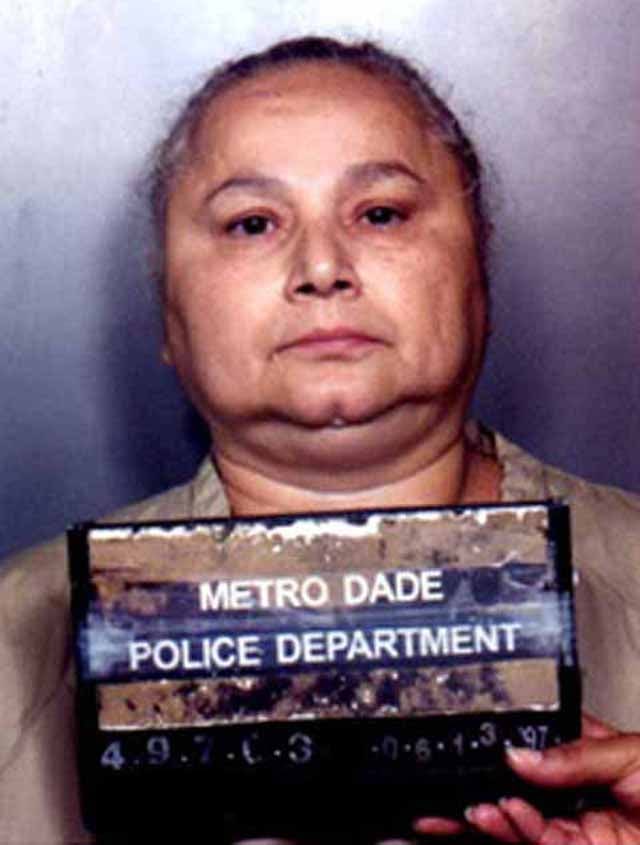
Griselda Blanco's net worth is estimated at $2 billion. The figure describes the high point of her criminal earnings across the 1970s and 1980s, and it is presented on a valuation date of 6 November 2026 as a historical estimate in current dollars, not a balance sheet drawn on that day. Blanco was shot dead in Medellín in September 2012, so there is no living estate or listed stake to price.
What the number tries to capture is the accumulated product of a cocaine distribution business: the cash generated by a network that is reported to have earned $80 million a month at its height, the property attributed to her in Colombia that authorities later moved to forfeit, and the cost of running an operation that spanned two countries and supplied dealers across the United States. Almost none of it was ever held in an account in her own name.
It is an estimate, and a soft one. No tax return, audited account or court inventory has ever placed a figure on Blanco's personal wealth. The nearest thing to a hard number is the monthly earnings figure reported for her network, and every larger sum built on top of it is a reconstruction.
How the fortune was built
Griselda Blanco Restrepo was born in Cartagena, on Colombia's Caribbean coast, in February 1943. Her mother, Ana Lucía Restrepo, worked as a servant on a Cartagena estate and was dismissed when she became pregnant by her employer, according to the magazine Semana. Mother and daughter moved south to Medellín when Griselda was three.
The early record is thin and much of it rests on people who knew her. She was a pickpocket before she was a teenager, and she ran away from home at nineteen to escape the sexual abuse of her mother's boyfriend, stealing in the city centre until she was twenty. Charles Cosby, a former lover, said that at eleven she kidnapped a child from a wealthier neighbourhood, tried to ransom him and eventually shot him. Whether she also worked in prostitution has been speculated about but never established.
She met her first husband, Carlos Trujillo, when she was thirteen, and the two started a marijuana dealing business in Colombia. By twenty-six she had three sons with him, Dixon, Uber and Osvaldo. The marriage ended in divorce but the business partnership did not, and Trujillo was later killed on her orders after an argument over a deal that went awry.
In 1964, now divorced, Blanco entered the United States illegally on false documentation under an assumed name. She settled in Queens, New York, with her three children and her second husband, Alberto Bravo, a cocaine smuggler for the Medellín Cartel. Together they set up a drug operation in the city that ran for close to a decade, with product sourced in Colombia and sold into the New York market. There was no company behind it, only a partnership of relatives and subordinates.
That first run ended in April 1975, when Blanco was identified by authorities and indicted on federal drug conspiracy charges alongside thirty of her subordinates. The family fled to Colombia rather than face conviction. Bravo was killed after a dispute in which he accused her of stealing millions from the enterprise and she accused him of letting her nickname go to her head; she shot him in the head.
She returned in the second half of the 1970s and started a new operation in Miami, by then the main landing point for Colombian cocaine. Her timing put her at the centre of the Miami drug war, a period of public violence that ran to hundreds of homicides a year. Her network again spanned the United States and Colombia, supplied Miami, New York and dealers in California, and is reported to have earned $80 million a month. Law enforcement answered with CENTAC 26, a joint Miami-Dade Police and Drug Enforcement Administration unit aimed at the cocaine flow.
The federal case that finally caught her rested on the accumulated evidence of the conspiracy rather than on a single seizure. It closed on 17 February 1985, when DEA agents arrested her at her home.
Assets and holdings
There is no holding company, trust or family office to point to, and no published inventory of what she owned. Her money was held the way a great deal of Miami cocaine money was held in the period: in cash, and in property registered through other people rather than in her own name. That structure is why the fortune cannot be counted today. Cash leaves no register, and the record contains no schedule of the assets she accumulated at her peak.
What can be traced falls into three groups. The first is the working capital of the trade, the money needed to buy cocaine in Colombia and to keep an operation spanning two countries running. The second is property in Colombia, chiefly in Antioquia, where she had family and where she returned after her release. The third is the living that the business supported in Miami in the early 1980s, at a scale the reported earnings imply but no document itemises. What she owned and what she could be shown to own were two different things, and only the second was ever tested.
The clearest documentary trace is later and adversarial. On 9 September 2015, three years after her death, RCN Radio reported that Colombian authorities had begun extinción de dominio proceedings in Antioquia, the civil forfeiture process that strips ownership of assets judged to derive from crime, against goods attributed to Blanco. That filing is the closest thing to an official list. It concerns what remained, and it is a prosecutor's action, not a valuation of a peak era fortune.
Income and the scale of the operations
The cash engine was cocaine distribution. Blanco's network bought product in Colombia, moved it into the United States and sold it in volume to distributors who served the retail market. The margin was the gap between the Colombian price of a kilogramme and the American wholesale price, multiplied by the volume the network could move.
The network is reported to have earned about $80 million a month at its peak, roughly $960 million a year in the money of the time. That only makes sense as turnover rather than profit, and as the total of an organisation rather than one person's income. Her own share was a fraction, taken as an owner's cut and spent on the next shipment and on the people who ran the operation. The rest of the gross went back out as the cost of doing business at that volume.
Two other streams sat alongside it. The first was the marijuana business she and Trujillo ran in Colombia in the 1960s, small by comparison but the origin of the capital. The second was the value of the route itself: a working channel from Colombia into Florida and up the eastern seaboard, with buyers already lined up, was worth more than any single load, and control of it was much of what the Miami violence was fought over.
Where the money went
The first and largest loss was time. Blanco was arrested on 17 February 1985 and did not leave custody until 2004, about nineteen years in which the business was dismantled, her subordinates prosecuted and her routes taken over by others. Criminal income does not survive that interruption, and the network was her only real asset.
The second was the cost of operation and defence. An organisation of that size meant paying for product up front and paying the people who moved and held it, and she faced two prosecutions rather than one. She was tried on federal conspiracy charges in New York and, separately, charged with three counts of murder in Florida, a case that ran for years before it collapsed and was then resolved by a plea.
The third was forfeiture, and it was slow. The record of it comes long after the money had gone: the Antioquia extinción de dominio action reported in September 2015 sought to strip ownership of property attributed to her in Colombia, which means whatever she left behind passed, in the state's account, back to the state rather than to her children.
What is documented of her last years in Medellín is not the life of someone sitting on billions. She was released from prison in 2004 after serving her full sentence and deported with no reported fortune, and on 3 September 2012 she was killed outside a butcher shop on 29th Street.
What the records actually show
Court records establish two things beyond argument: that she was convicted in federal court in New York of conspiring to manufacture, import into the United States and distribute cocaine, receiving fifteen years, and that she pleaded guilty in Florida in 1998 to three counts of second-degree murder, receiving twenty years to run concurrently. Neither quantifies a fortune. A trafficking conviction establishes conduct, not a bank balance.
The wealth figure rests on a weaker class of material. The $80 million a month figure is reported for the network and appears consistently in accounts of the Miami period, but it is a description of an organisation's turnover, not a record of her own money. Everything above it, including the $2 billion estimate, is a reconstruction: turnover is taken as reported, a share is assumed, and the total is carried forward to a present day value.
Other parts of the story are softer still. Charles Cosby's account of the killing at eleven is a single source speaking decades later. The claim that she belonged to the Medellín Cartel is one that, on this record, some have made and others have not established. The record is imprecise at the edges too: her date of birth is given as both 14 and 15 February 1943, a fair warning about how detail drifts in a case built on memory.
How that compares
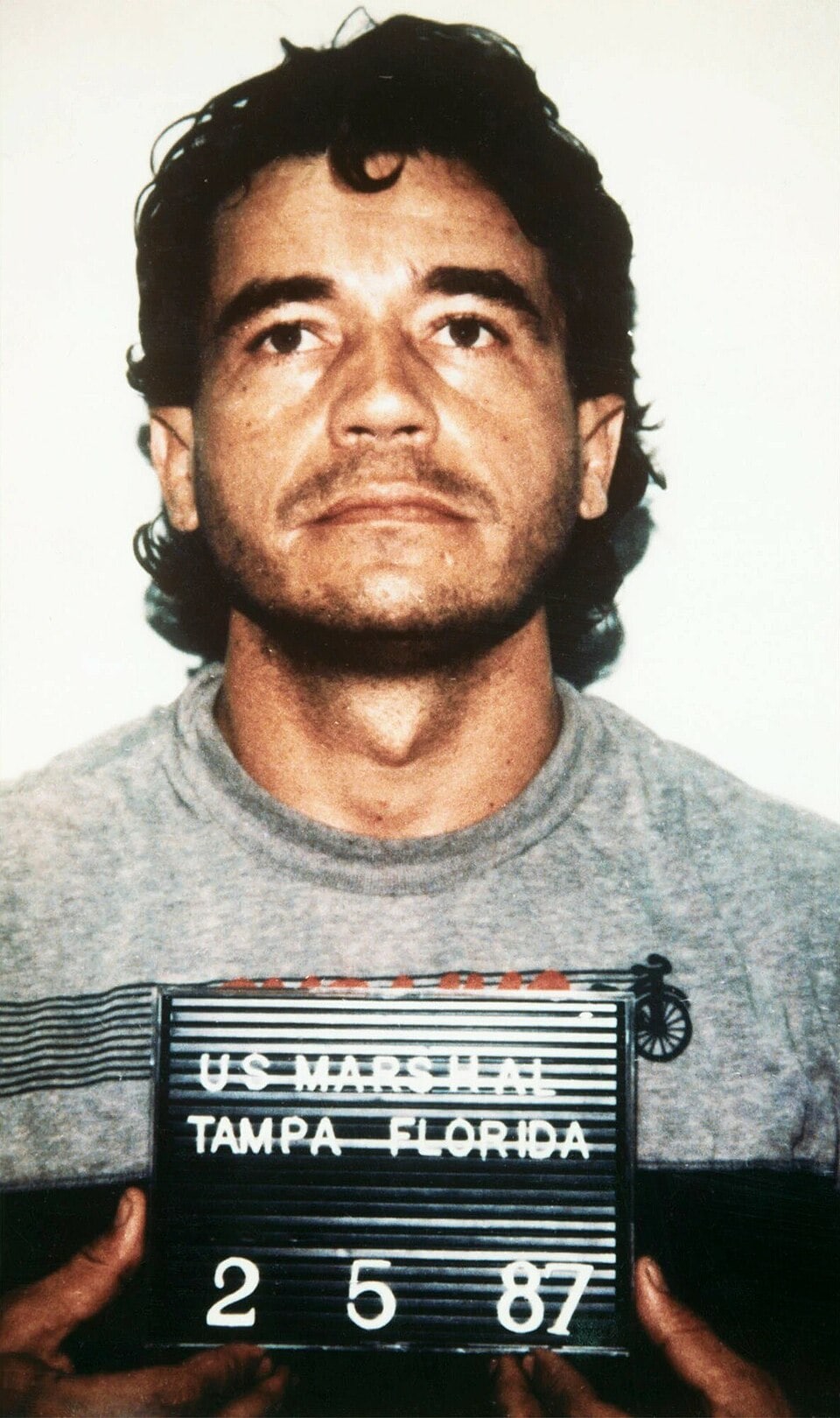
Two other fortunes already on networth.watch sit in the same category and the same trade. Carlos Lehder, the Colombian trafficker who built the air route through Norman's Cay in the Bahamas for the Medellín organisation, is carried at an estimated $2.7 billion at his peak. Blanco's $2 billion puts her below him, which is roughly what the structure of the two businesses would predict: Lehder took a transport fee in product on an industrial flow, while Blanco ran a distribution network and carried the full cost of buying weight before she could sell it.
Pablo Escobar, the head of the Medellín Cartel, is carried at an estimated $30 billion. The gap of roughly fifteen times is the difference between owning the supply and running a route into the consumer market. All three figures are estimates of the same kind, built on reported volume and price rather than on accounts, and none of them should be read as a measured sum. What separates them is not effort but position in the chain: the man who owned the supply, the man who owned the transport, and the woman who owned a route to the buyer.
Net worth milestones
- 1964 Enters the United States illegally on false documentation under an assumed name and settles in Queens, New York, where the cocaine operation with Alberto Bravo runs for close to a decade.
- 1975 Identified by authorities and indicted in April on federal drug conspiracy charges alongside thirty of her subordinates, then flees to Colombia to avoid conviction, abandoning that first operation.
- 1985 Arrested at her home by DEA agents on 17 February, by which point the rebuilt Miami network is reported to be earning $80 million a month.
- 1998 Pleads guilty in Florida to three counts of second-degree murder and takes twenty years concurrent, ending any prospect of rebuilding the business.
- 2004 Released from prison after serving her full sentence and deported back to Colombia with no fortune documented anywhere in the record.
- 2012 Shot dead in Medellín on 3 September at the age of 69, leaving property that Antioquia authorities moved to forfeit three years later.
Legal history and later life
Blanco's record in the United States begins with the April 1975 federal indictment on drug conspiracy charges, which she avoided by fleeing to Colombia. She was identified and arrested again on 17 February 1985, when DEA agents took her at her home, and was charged with conspiring to manufacture, import into the United States and distribute cocaine. Tried in federal court in New York, she was found guilty and sentenced to fifteen years.
While serving that sentence, the state of Florida charged her with three counts of first-degree murder. Prosecutors made a deal with Jorge Ayala, one of her most trusted hitmen, who agreed to testify that Blanco had ordered him to carry out the killings. The case collapsed on technicalities arising from a phone sex scandal between Ayala and two secretaries employed at the state attorney's office. In 1998 Blanco pleaded guilty to three counts of second-degree murder and was sentenced to twenty years, concurrent with the federal term.
Beyond those convictions the record describes killings for which she was never tried: her first husband Carlos Trujillo, executed after a business argument; her second husband Alberto Bravo, shot in the head after she accused him of stealing millions; and her third husband Darío Sepúlveda, assassinated in Colombia after taking their son Michael.
She was released in 2004 having served her full sentence and deported to Colombia, where according to her son she became a born again Christian in her later years. On 3 September 2012 she was shot twice in the head by an assassin on a motorcycle as she left a butcher shop in Medellín, a killing that mimicked the method she had practiced during the Miami years. In 2015 Antioquia authorities opened forfeiture proceedings against property attributed to her. Her son Michael, sentenced in 2012 on two felony cocaine counts, completed his probation in 2018.
Frequently asked questions
How much was Griselda Blanco worth when she died? Nothing documented. She was released from US prison in 2004 after serving her full sentence and deported to Colombia with no reported fortune. The $2 billion figure describes the peak of her network's earnings in the 1970s and 1980s, not the state of her finances in 2012. By the account of the forfeiture action opened in Antioquia in 2015, even the property she left behind was claimed by the state.
Was Griselda Blanco part of the Medellín Cartel? It is claimed rather than established. Her second husband Alberto Bravo was described as a cocaine smuggler for the organisation, and she moved in the same supply chain, but the record notes that some have claimed she was part of the cartel while others have not accepted it. No court finding places her in its leadership, and she ran her own distribution network rather than reporting to Pablo Escobar.
What was Griselda Blanco convicted of? Two things. A federal jury in New York found her guilty of conspiring to manufacture, import into the United States and distribute cocaine, and she was sentenced to fifteen years. In Florida in 1998 she pleaded guilty to three counts of second-degree murder and received twenty years, concurrent with the federal term. The earlier first-degree murder case against her had collapsed on a witness scandal.
Where did the $2 billion figure come from? It is a reconstruction. The reported anchor is that her network earned about $80 million a month at its height, a turnover figure rather than a profit. Analysts assume an owner's share of that flow, apply it across the active years, and carry the result forward to a 2026 valuation date. No account, tax filing or court inventory supports the total.
Did her family keep any of the money? There is no evidence of a retained fortune. Her assets were held in cash and through other people, and the Antioquia extinción de dominio action reported in September 2015 sought to take ownership of property attributed to her in Colombia. Her son Michael was sentenced on two felony cocaine trafficking counts in 2012 and completed his probation in 2018.