Joaquín Guzmán Loera Net Worth
The Sinaloa cartel, the tunnels and the life sentence.
Last updated Nov 6, 2026 · 11 min read
Estimated net worth
$1 Billion
USD · As of November 6, 2026
- Source of wealth
- Cocaine trafficking from Colombia, Methamphetamine and precursor imports, Heroin and marijuana, Border tunnels and US distribution cells, Property and ranches in Mexico
- Nationality
- Mexico
- Estimate
- Historical estimate by Net Worth Watch
What is El Chapo's net worth?
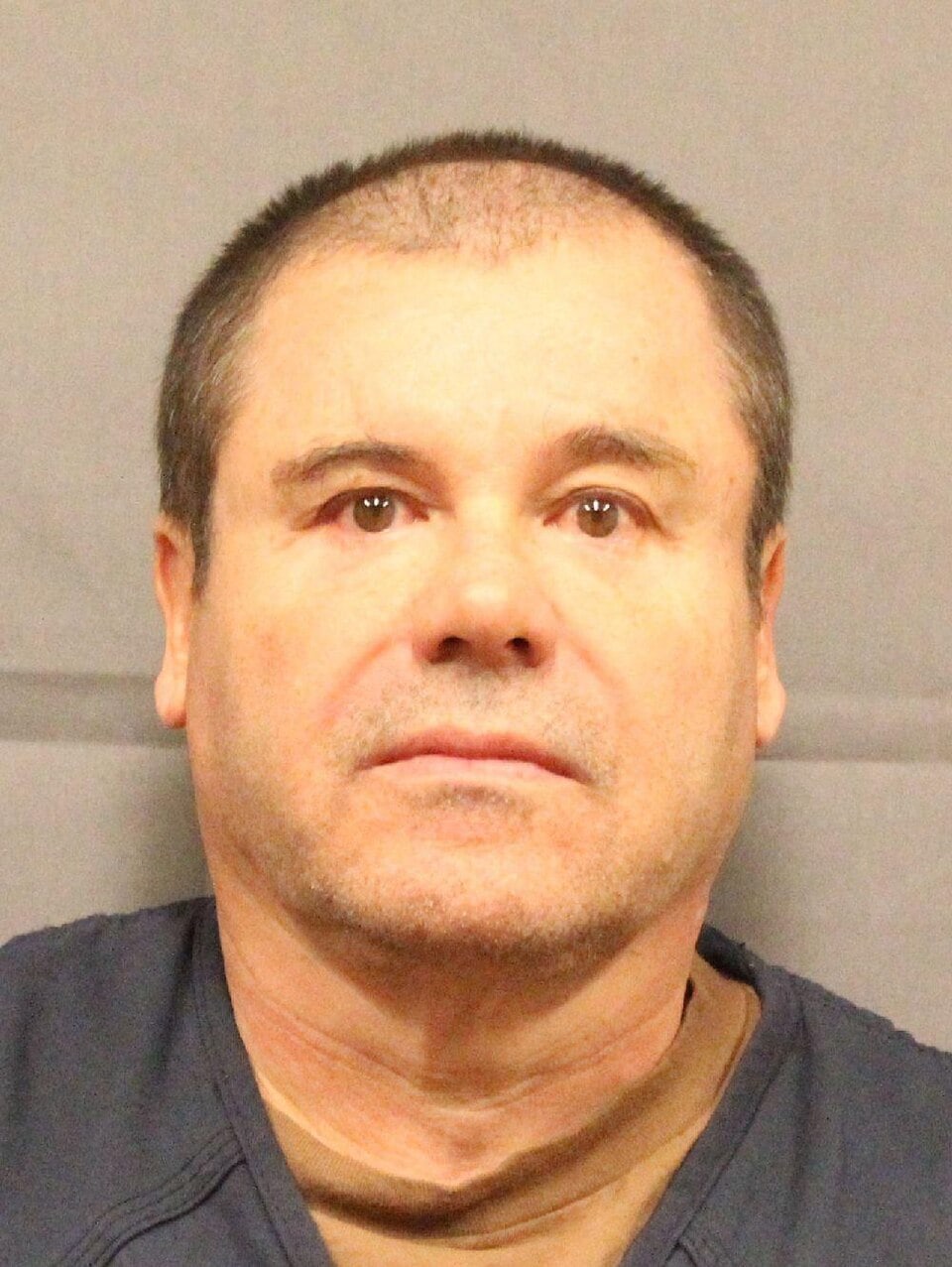
Joaquín "El Chapo" Guzmán Loera has an estimated net worth of $1 billion as of a 2026 valuation date. That is the figure attached to the years in which Forbes placed him among the world's billionaires, stated most explicitly in 2011, when the magazine ranked him tenth in Mexico and 1,140th in the world at roughly $1 billion.
The number describes a criminal enterprise rather than a portfolio. His money was tied up in cocaine, heroin, methamphetamine and marijuana moving from Colombia and Asia through Mexico into the United States and Europe, in the tunnels and distribution cells that carried the product, in dozens of properties registered under false names, in ranches across Sinaloa, Durango, Chihuahua and Sonora, and in the cash that paid guards, officials and lawyers.
It is an estimate, and a rough one at that. No balance sheet was ever produced for him and no auditor ever saw his books. The only figure of comparable scale is a legal one: on 17 July 2019 a United States court ordered him to forfeit assets worth more than $12.6 billion, as reported at sentencing. That order measures the proceeds of the trade. It is not an inventory of anything that was found.
How the fortune was built
Guzmán was born on 4 April 1957 in La Tuna, a hamlet in Badiraguato, Sinaloa, into a family that grew opium poppies in the Sierra Madre Occidental. He left school in the third grade and is functionally illiterate. At around fifteen he planted his own marijuana with his Beltrán Leyva cousins.
He entered organised crime through his uncle Pedro Avilés Pérez, a pioneer of Mexican trafficking. By the late 1970s he worked for Héctor "El Güero" Palma Salazar, moving product out of the sierra to the border by aircraft. In the early 1980s the Guadalajara Cartel leaders introduced him to Miguel Ángel Félix Gallardo, for whom he was first a chauffeur and then head of logistics, coordinating cocaine from Colombia to Mexico by land, air and sea.
The mid 1980s handed the Mexican groups their opening. United States pressure on the Caribbean corridor pushed the Colombian cartels to hand more of the movement to their Mexican partners. When he was arrested in 1989, a summit in Acapulco divided his territories. The Arellano Félix brothers took Tijuana, the Carrillo Fuentes family took Chihuahua, and the Pacific faction became the Sinaloa Cartel under Ismael "El Mayo" Zambada, Palma and Guzmán, who took the corridors at Tecate, Mexicali and San Luis Río Colorado.
The money followed quickly. A 1987 Arizona indictment alleged that between 19 October 1987 and 18 May 1990 he shipped 2,000 kilograms of marijuana and about 4,700 kilograms of cocaine, and received roughly $1.5 million in proceeds sent back to Sinaloa. Cocaine was packed into chilli pepper cans under the brand La Comadre and shipped by train, and payment came back in suitcases of cash flown to Mexico City, where corrupt customs agents waved them through, much of it for bribes at the Attorney General's Office. He pioneered long tunnels under the border and the piecemeal strategy of many small loads, both of which cut losses.
Captured in Guatemala on 9 June 1993, he was sentenced in Mexico to 20 years for murder and drug trafficking, and ran the organisation from his cell through his brother Arturo. When Palma was arrested on 23 June 1995, Guzmán took the leadership. After the Amezcua brothers fell in 1999 he moved into methamphetamine, importing precursors from China, Thailand and India and building laboratories across five states, a business his alone, using the existing infrastructure, so no extra aircraft, pilots or bribes were needed.
He escaped on 19 January 2001 in a laundry cart, an operation that reportedly cost $2.5 million and implicated 78 people. Through the manhunt that followed he and Zambada became Mexico's dominant traffickers, and in 2013 Chicago named him Public Enemy Number One, a title last held by Al Capone.
Assets and holdings
There was no holding company. According to investigators, Guzmán's property was bought by trusted people acting for him and registered under false names, spread across residential neighbourhoods and used as stash houses for drugs, weapons and cash. He owned ranches in Sinaloa, Durango, Chihuahua and Sonora where local workers grew opium and marijuana, and safe houses in Culiacán, Mazatlán, Los Mochis and the mountains, along with the ranch home in Jesús María where he settled his first wife and four children. When the navy closed in on a house in 2014, he escaped through tunnels connecting six neighbouring properties.
The operating assets were industrial. The Sinaloa Cartel built a shipping and transport empire to serve the trade: aircraft, boats, trucks, laboratories, and the tunnels that carried loads under the border, including the 1.5 kilometre tunnel with lighting, air ducts and a motorcycle that took him out of prison in 2015. In his 2015 interview with Sean Penn he claimed a "fleet of narco-submarines, airplanes, trucks and boats".
Cash was held and moved rather than banked, in suitcases and through couriers. Some of the visible wealth sat in the names of relatives. The United States Treasury sanctioned his sons Iván and Ovidio, his wives Griselda López Pérez and Alejandrina María Salazar Hernández, and his son Jesús Alfredo under the Kingpin Act, which freezes any assets they hold in United States jurisdiction. Family indictments describe Jesús Alfredo as manager of his father's "growing list of properties", which is the closest thing to a register that exists.
Income and the scale of the operations
The cash came from volume. The cartel smuggled multi-ton cocaine shipments from Colombia through Mexico to the United States by air, sea and road, with distribution cells in American cities, and it produced or sourced methamphetamine, marijuana and heroin from Southeast Asia. At the time of his 2014 arrest he was described by United States officials as importing more drugs into the country than anyone else.
The methamphetamine business was the highest-margin addition. Because precursors could be bought in China, Thailand and India and the product rode along with cocaine shipments, the Colombians did not have to be paid a share and the transport network was already sunk cost. By the early 2000s he was operating in 17 of Mexico's 31 states, with Ignacio "Nacho" Coronel Villarreal running production and earning the nickname the Crystal King. Heroin from Southeast Asia and marijuana from his own ranches filled out the load.
Some of the figures are large enough to be almost meaningless. A 2014 indictment in Brooklyn alleged that his network laundered more than $14 billion in drug proceeds, and that he and Zambada paid millions of dollars to Juan Orlando Hernández, money that helped him win the Honduran presidency in 2013.
Where the money went
The largest single claim on the fortune was the forfeiture. At sentencing on 17 July 2019 the court ordered him to forfeit more than $12.6 billion, alongside life plus 30 years. A money judgment of that size is not a seizure. It records what prosecutors said the enterprise earned, and the gap between it and the $1 billion Forbes attributed to him shows how little of the money was ever located.
Enormous sums went back out as protection. Suitcases of cash bribed officials at the Attorney General's Office. The 2001 escape cost a reported $2.5 million in payments, and before it associates brought him cash in prison so that guards would act as his servants. Prison staff were on his payroll, and police in Jalisco were paid to give him a 24 hour start.
Assets were also lost to war and to sanctions. His son Édgar was killed in 2008 and his brother Arturo was killed in prison in 2004. Property held in the names of relatives was frozen under the Kingpin Act from 2012 onward, which put it beyond use even where it was not seized. Mexican authorities took ranches and safe houses over the years, and the laboratories, tunnels and aircraft were expendable.
What the records actually show
The $1 billion comes from journalism, not disclosure. Forbes placed him on its billionaires list and in 2011 ranked him tenth in Mexico and 1,140th in the world at roughly that figure, and between 2009 and 2013 it also listed him among the most powerful people in the world. The magazine had no access to his accounts. The number was built from reporting on shipment volumes, prices and the structure of the trade, an informed estimate rather than a valuation.
The $12.6 billion is a different kind of number: a forfeiture stated in open court and reported at sentencing. The $14 billion is a prosecution allegation from a 2014 indictment, not a finding. The $1.5 million in the 1987 Arizona indictment is a specific, bounded claim about one route over one period, and the most solid documentary figure in the file.
Everything else rests on testimony. The Brooklyn trial of 2018 and 2019 produced cooperating witnesses, ledgers and intercepted messages, and prosecutors said the evidence described a network moving multi-ton shipments. None of it produced an asset schedule. Nobody has ever added up what Guzmán owned, and the Drug Enforcement Administration's comparison to Pablo Escobar was an assessment of scale, not a valuation.
How that compares
Two other fortunes already on networth.watch belong to the same category of criminal enterprise. Pablo Escobar is carried at $30 billion at his early 1990s peak, and Amado Carrillo Fuentes at $25 billion for the Juárez cartel in the 1990s.
Guzmán ranks below both despite running a larger and longer-lived operation, and the difference is not a judgement about volume. Escobar's figure reflects control of the whole chain from the Andean laboratories to the Florida wholesalers at a moment when the cocaine price was at its highest. Carrillo Fuentes is measured by the aircraft fleet that moved tonnage for the Colombian producers. Guzmán worked in a later, cheaper market, shared the Sinaloa Cartel with Zambada and other partners, and spent heavily on bribes to stay free.
He was also less able to convert cash into anything durable. His property sat in other people's names, his family was sanctioned, and the state was hunting both the man and the assets. A $1 billion estimate for the most wanted trafficker in the world is a statement about what could be inferred, not what was held.
Net worth milestones
- 1989 Félix Gallardo was arrested and the Acapulco summit split his organisation, leaving Guzmán the Sinaloa corridors at Tecate, Mexicali and San Luis Río Colorado.
- 1993 Captured in Guatemala on 9 June and sentenced in Mexico to 20 years for murder and drug trafficking, still directing the cartel from prison.
- 2001 Escaped from a maximum security prison on 19 January in a laundry cart, in an operation that reportedly cost $2.5 million and drew in 78 people.
- 2011 Ranked by Forbes as the tenth richest man in Mexico and 1,140th in the world, with a net worth of roughly $1 billion.
- 2015 Escaped again on 11 July through a 1.5 kilometre tunnel dug to the shower of his cell, and was recaptured on 8 January 2016 in Los Mochis.
- 2019 Sentenced on 17 July to life plus 30 years and ordered to forfeit more than $12.6 billion, then held at ADX Florence in Colorado.
Legal history and later life
Guzmán's first conviction came in Mexico after his 1993 arrest in Guatemala, for murder and drug trafficking, and carried 20 years. He walked out in a laundry cart in 2001. He was arrested again in Mazatlán on 22 February 2014, and escaped from the Altiplano prison outside Mexico City on 11 July 2015 through a tunnel. Recaptured in Los Mochis on 8 January 2016 after a shootout, he was extradited to the United States on 19 January 2017 to face a 17 count indictment.
The trial in the Eastern District of New York ran from November 2018 to February 2019, with an anonymous jury and armed escort. He was found guilty of all counts on 12 February 2019, including engaging in a continuing criminal enterprise, drug conspiracies, firearms counts and money laundering conspiracy. On 17 July 2019 Judge Brian Cogan sentenced him to life imprisonment without the possibility of parole plus 30 years, and ordered the forfeiture of more than $12.6 billion.
He is held at ADX Florence, the federal supermax in Colorado, under register number 89914-053. His wife Emma Coronel Aispuro pleaded guilty on 6 June 2021 to helping run the drug empire, and was released in September 2023. His son Ovidio was arrested on 5 January 2023 and extradited that September, and another son, Joaquín Guzmán López, was arrested in El Paso, Texas, on 25 July 2024 together with Ismael "El Mayo" Zambada. Mexico had offered a reward of $3.8 million and the United States $5 million for his capture. He is 69.
Frequently asked questions
Is El Chapo a billionaire? Forbes estimated his net worth at roughly $1 billion in 2011, when it ranked him tenth in Mexico and 1,140th in the world. That was a journalistic estimate built on reporting about shipment volumes, prices and the structure of the trade, not on any disclosure by Guzmán, and it has never been tested in court. Read it as an order of magnitude rather than a balance sheet of assets.
What happened to the $12.6 billion forfeiture? It was ordered at his sentencing on 17 July 2019 as part of the judgment against him, along with life plus 30 years. Courts issue such money judgments on the basis of what the enterprise was found to have earned, which is why the amount is so much larger than the $1 billion Forbes attributed to him. The order is not a published list of assets located and taken.
How did the Sinaloa Cartel make its money? Mainly cocaine, moved in multi-ton shipments from Colombia through Mexico to the United States, with distribution cells in American cities. Methamphetamine became a large second line after 1999, when Guzmán imported precursor chemicals from China, Thailand and India and built laboratories across five states. Heroin and marijuana, including crops grown on his own ranches, made up the rest of the trade.
Where is El Chapo now? He is serving life without parole plus 30 years at ADX Florence, the federal supermax prison in Colorado, under register number 89914-053, where he has been held since his sentencing in July 2019. He was extradited from Mexico in January 2017 after his third capture, in the coastal city of Los Mochis in Sinaloa, on 8 January 2016. He is 69 years old.
Did anyone else in his family face charges? Yes. His wife Emma Coronel Aispuro pleaded guilty in June 2021 to charges that included helping run the drug empire, and was released in 2023. His son Ovidio was arrested in January 2023 and extradited to the United States, and another son, Joaquín Guzmán López, was arrested in El Paso in July 2024. Several relatives were sanctioned under the Kingpin Act.