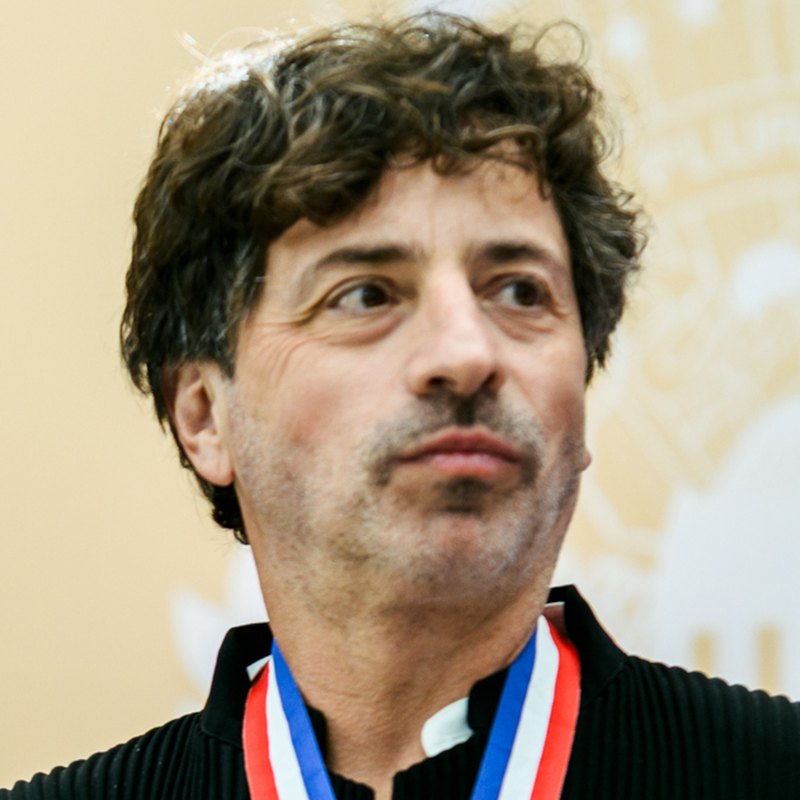
Amancio Ortega Net Worth
Fast fashion built a property empire.
Last updated Nov 6, 2026 · 11 min read
Estimated net worth
$140 Billion
USD · As of November 6, 2026
- Source of wealth
- Inditex shareholding, Pontegadea property portfolio, Energy infrastructure stakes, Inditex dividends
- Nationality
- Spain
- Estimate
- Net Worth Watch estimate
What is Amancio Ortega's net worth?
Amancio Ortega's net worth is estimated at $140 billion on 6 November 2026. The figure is a snapshot from a single day, not a settled account, and almost all of it is the market value of one holding: his stake in Inditex, the listed fashion group whose chains include Zara, Massimo Dutti, Bershka, Pull and Bear, Stradivarius, Oysho and Zara Home.
The remainder sits in property and in minority positions in energy infrastructure, gathered under Pontegadea, the investment company he chairs. Pontegadea pools the real estate, which Bloomberg valued at $17.2 billion in July 2020, and the financial holdings bought for income, among them 5 percent of the gas network operator Enagás, 5 percent of the grid operator Red Eléctrica and 12 percent of Portugal's Redes Energéticas Nacionais.
None of the total is cash that an outsider has ever counted. The Inditex portion is repriced every trading day with the share price, which is why published estimates for the same man differ by tens of billions. The Wikipedia entry puts his fortune at $147 billion during 2026, while Forbes listed $103 billion in 2024 and about 73.1 billion euros in 2021.
It is an estimate, and it should be read as one.
How the fortune was built
Amancio Ortega Gaona was born on 28 March 1936 in Busdongo de Arbas, a village in the province of León, the youngest of four children. His parents were Antonio Ortega Rodríguez and Josefa Gaona Hernández, both from Valladolid province. His father worked on the railways, and the family moved to Tolosa in Gipuzkoa, where Ortega spent his childhood, then to A Coruña when he was 14. He left school at that point and found work as a shop hand for a local shirtmaker called Gala, still on the same corner in the city centre, where he learned to make clothes by hand.
In 1963 he founded Confecciones Goa, a workshop that made quilted bathrobes and sold them wholesale. In 1966 he married Rosalía Mera, who worked in the business, and in 1975 the couple opened the first Zara shop in A Coruña. The formula was short runs, fast turnover and clothes copied from expensive fashion and sold cheaply, which is why the article calls him a pioneer of fast fashion.
The single shop became a group. By 2009 Zara sat inside Inditex, Industrias de Diseño Textil Sociedad Anónima, which ran more than 6,000 stores under Zara, Massimo Dutti, Oysho, Zara Home, Kiddy's Class, Tempe, Stradivarius, Pull and Bear and Bershka, employed more than 92,000 people, and in which Ortega held 59.29 percent. The article records him as president of Inditex from 1985 to 2011.
In 2000 he made a public appearance to warm up the market ahead of the flotation, which came in 2001 and made headlines in the Spanish financial press. That listing is the moment his paper fortune became measurable: before it the value was a private estimate, afterwards it was a share price multiplied by a share count.
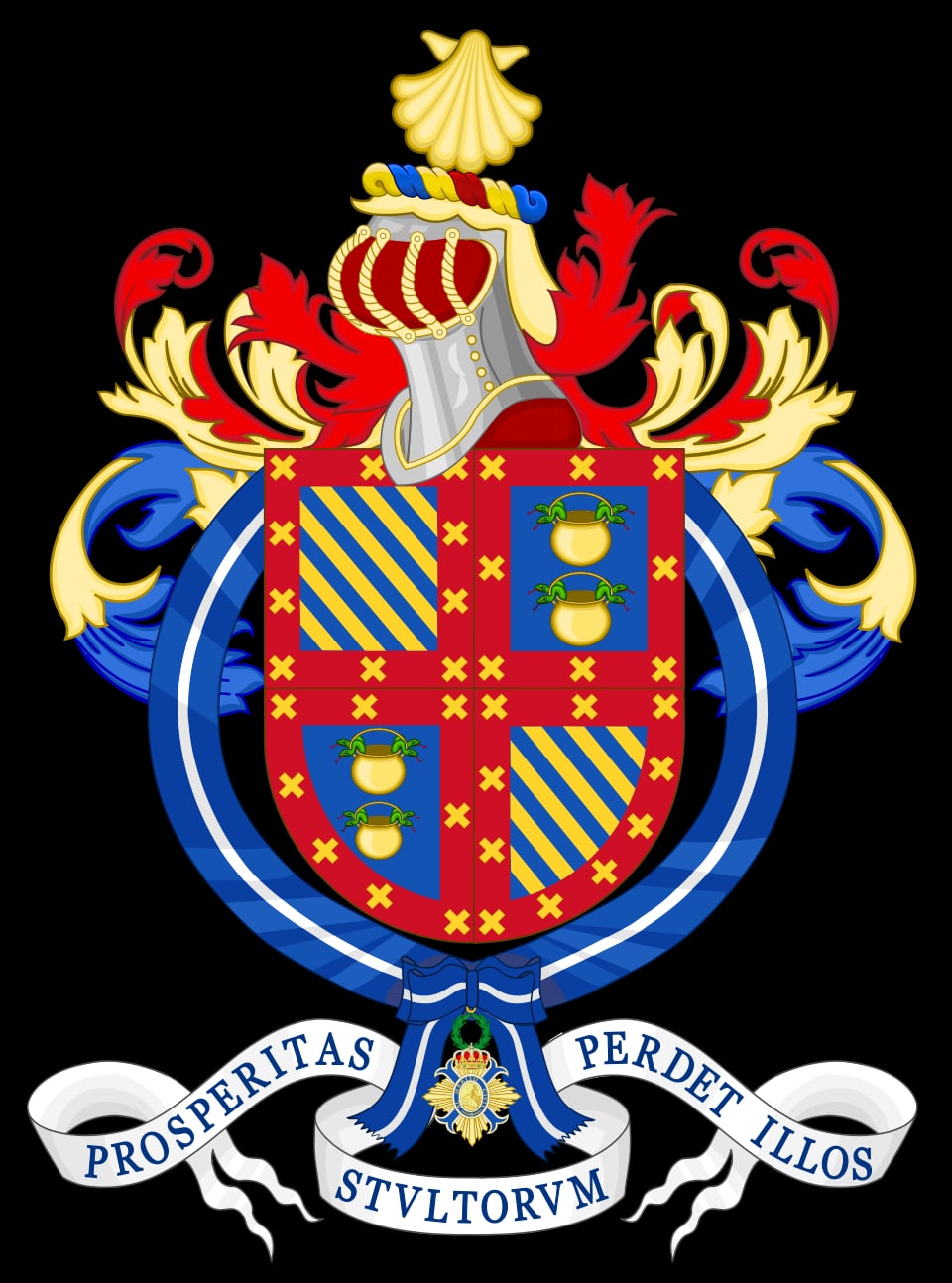
In 2009 he was appointed Knight Grand Cross of the Order of Civil Merit. In 2011 he announced his retirement from Inditex and said he would ask the chief executive, Pablo Isla, to take his place. In 2012 he gave about 20 million euros to Cáritas Internationalis.
From the proceeds he bought buildings rather than starting new businesses: the Torre Picasso skyscraper in Madrid, the Epic Residences and Hotel in Miami, and the Troy Block complex in Seattle, one of the buildings where Amazon has its headquarters. In 2019 Pontegadea paid $72.5 million for a hotel in downtown Chicago, following a building in Washington's central business district and two Seattle office buildings. In December 2019 it bought 5 percent of Enagás for 281.64 million euros, and in July 2021 the same share of Red Eléctrica plus 12 percent of the Portuguese grid operator REN.
Assets and holdings
The structure has two layers. The first is Inditex, where he held 59.29 percent in 2009, channelled through Pontegadea Inversiones and Partler. This is the balance sheet of the fortune: a controlled stake in a listed retailer with thousands of stores, which supplies both the headline number and the cash.
The second layer is Pontegadea, the investment company he chairs, which holds everything that is not Inditex. Its property arm is concentrated in Madrid and Barcelona, with more than twenty buildings along the Paseo de la Castellana, Serrano, Recoletos and Ortega y Gasset in Madrid and on the Paseo de Gracia and Via Laietana in Barcelona. Abroad it holds property in five other European capitals, Paris, Berlin, Rome, Lisbon and London, and in the United States: the Haughwout Building in Manhattan, the Southeast Financial Center, the Chicago hotel bought in 2019, the Washington building, the two Seattle offices, the Troy Block complex, the Epic Residences and Hotel in Miami and the Torre Picasso in Madrid.
The third block is financial: minority stakes in regulated infrastructure bought for yield, 5 percent of Enagás, 5 percent of Red Eléctrica and 12 percent of REN, which sit alongside the property as a bond substitute rather than as a business he runs.
Personal assets are modest by comparison and are the only items owned outright: two yachts, Drizzle and Valoria B, and a Gulfstream G650 jet. He mostly lives in an apartment in A Coruña rather than in any of the towers.
Income and the scale of the operations
The cash comes from the Inditex dividend. A stake of 59.29 percent of a retailer with more than 6,000 stores and 92,000 employees, the scale the article records for 2009, makes the twice yearly payout his largest recurring payment, and the page does not publish the total. What matters is what happens to it: the dividend is not spent but pushed back out through Pontegadea into buildings and infrastructure stakes, which is how a shareholding turns into a property empire without selling the shares.
The second stream is rent. More than twenty prime retail buildings in Madrid and Barcelona, offices in Paris, Berlin, Rome, Lisbon and London, and towers in New York, Seattle, Chicago and Miami produce lease income from tenants that are mostly large companies. The July 2020 disclosure that these holdings were worth $17.2 billion describes the asset base, not the rent, and the page gives no yield figure.
The third is infrastructure dividends from Enagás, Red Eléctrica and REN, regulated utilities with predictable payouts, bought because they behave like long dated bonds.
On top of that sits his pay as executive chairman of Pontegadea, which the article does not quantify and which is trivial against the dividend. The operations behind it are large: Inditex alone runs nine chains and thousands of shops.
Where the money went
No forfeiture, seizure or criminal penalty appears in the record, because none was imposed. The money went instead into taxes, philanthropy and more assets.
The page does not report what he pays in tax, in Spain or elsewhere, and no filing summarised there gives a figure. What it does record is giving. In October 2012 his foundation gave 20 million euros to Cáritas, described as the largest single donation the organisation had received. In 2015 it gave 17 million euros to hospitals in Galicia and Andalusia. In March 2017, on his 81st birthday, it announced 320 million euros for public healthcare to fight cancer, which paid for more than 290 detection and treatment systems. Earlier reporting counted 440 machines.
Some of it was contested. The article notes that the healthcare donations were not unanimously welcomed and were criticised by parties including Podemos, which argued that public hospitals should be funded publicly. In May 2019 20 Minutos reported that almost half the donated cancer machines stood idle.
Losses came from the market. The article records that he lost $10 billion in the coronavirus pandemic, a fall in the Inditex share price rather than money leaving his accounts. Everything else was reinvestment: the Chicago hotel, the Enagás stake and the REN position.
What the records actually show
The figure rests on one public number and a set of estimates. The public number is the shareholding: 59.29 percent of Inditex, the stake the article records for 2009 and the basis of any valuation, since a listed share price times a share count is arithmetic, not opinion.
Everything else is reported rather than filed. The $17.2 billion property value came from Bloomberg in July 2020, not from audited accounts on the page. The energy stakes carry purchase prices, 281.64 million euros for Enagás, but no current value. The yachts and jet carry no valuation at all.
The headline totals disagree, the clearest sign that they are estimates. The article gives $147 billion for 2026, $103 billion from Forbes for 2024 and about 73.1 billion euros for 2021, and notes $80 billion in 2015, when he briefly passed Bill Gates. Those are not four errors but four dates on a volatile share price.
What cannot be verified from the page: the current Inditex percentage, since 59.29 percent is a 2009 figure and buybacks or sales since then would have moved it; the debt against the property; the value of Pontegadea's unlisted interests; and how the family's total holding is divided between him, his second wife and the children of his first marriage.
How that compares
Two fortunes already on networth.watch in the same business category sit above him. Warren Buffett, the Berkshire Hathaway chairman, is listed at about $158 billion on 3 November 2026, and Steve Ballmer, the former Microsoft chief executive, at the same figure on the same date. Ortega's $140 billion on 6 November 2026 puts him a little below both.
The shape of the money is different. Buffett's is a portfolio of wholly owned operating companies plus a listed share book, Ballmer's is overwhelmingly a single technology stake, and Ortega's is a single retail stake plus a property company. All three are therefore hostage to one market: a fall in Inditex hits Ortega the way a fall in Microsoft hits Ballmer.
The comparison worth making is with Buffett. Both are in consumer businesses, both are old enough to have retired, and both have converted profits into things that produce cash rather than into new ventures. Ortega's property, at $17.2 billion in 2020, plays the role that Berkshire's railroad and utility holdings play for Buffett, a store of value with a predictable yield.
Net worth milestones
- 1963 Founds Confecciones Goa in A Coruña, a workshop making quilted bathrobes for wholesale buyers, the start of the family textile trade.
- 1975 Opens the first Zara shop in A Coruña with his wife Rosalía Mera, the short run, fast turnover model that becomes the Inditex group.
- 2001 Lists Inditex on the stock exchange after a 2000 publicity appearance, turning a private holding into a share price valued every trading day.
- 2011 Announces his retirement as president of Inditex, a post the article dates from 1985, and asks the chief executive Pablo Isla to succeed him as head of the group.
- 2015 Reaches about $80 billion as Inditex shares peak, briefly passing Bill Gates to become the richest person in the world.
- 2024 Forbes lists $103 billion, the last published figure before the $140 billion estimate dated 6 November 2026 used on this page, a rise driven by the Inditex share price.
Legal history and later life
The record contains no conviction, no charge and no regulatory penalty. Ortega's fortune has never been the subject of a criminal case, and the article reports no investigation by prosecutors or a tax authority. The legal matters it does describe are corporate: the creation of companies, an initial public offering and the transfer of a chairmanship.
Those transfers carry money with them. He divorced Rosalía Mera in 1986, and she died in August 2013 aged 69; the article gives no figures for how the Inditex holding was divided between them or passed to their children, Marcos and Sandra Ortega Mera. He married Flora Pérez Marcote in 2001, and their daughter Marta Ortega Pérez was born in 1984. He stepped back from Inditex in 2011 and has held no executive role there since, though he remains executive chairman of Pontegadea and still controls the vehicle holding the shares.
The only public controversy attached to him is philanthropic rather than legal. His donations to public hospitals were criticised by parties including Podemos as a private substitute for public spending, and in May 2019 20 Minutos reported that almost half of the donated cancer machines were not in use. Neither produced a court case.
He is now 90, born 28 March 1936, and lives quietly. The article records that he mostly stays in his apartment in A Coruña with his wife, dresses in a blue blazer, white shirt and grey trousers, refuses to wear a tie, and has never worn Zara clothes in public. No photograph of him appeared until 1999.
Frequently asked questions
Is Amancio Ortega the richest person in Spain? Yes, by every published list. The article describes him as the wealthiest person in Spain and the second wealthiest in Europe behind Bernard Arnault, placing him tenth in the world during 2026. The $140 billion estimate dated 6 November 2026 on this page is built on his Inditex stake plus Pontegadea's property and infrastructure holdings, and it moves with the Inditex share price.
Does he still run Inditex? No. He announced his retirement in 2011 and asked the vice president and chief executive, Pablo Isla, to take over as head of the group. He has not held an executive role at Inditex since. He does remain executive chairman of Pontegadea, the investment company that holds his Inditex shares along with the property and the energy stakes, so he still controls the whole structure.
How much of Inditex does he own? The last figure the article gives is 59.29 percent, recorded in 2009 when the group ran more than 6,000 stores and employed over 92,000 people. That holding sits in Pontegadea Inversiones and Partler. It is not certain that the same percentage applies today, because buybacks, treasury shares or later sales by the family vehicles would have changed it.
Why is Ortega so private? He has deliberately avoided publicity for more than fifty years. No photograph of him was published until 1999, he has granted interviews to only three journalists, and his one public appearance, in 2000, was staged to prepare investors for the Inditex flotation. He wears a blue blazer, a white shirt and grey trousers without a tie, and the article notes that none of it is made by Zara.
How reliable is the $140 billion figure? It is an estimate, not an audited total. The Inditex stake can be priced from the share price, but the property valuation of $17.2 billion dates from 2020, the energy holdings carry purchase prices rather than current values, and the debt against the estate is not public. The article itself gives $147 billion for 2026, so a range of tens of billions is normal.