Mick Jagger Net Worth
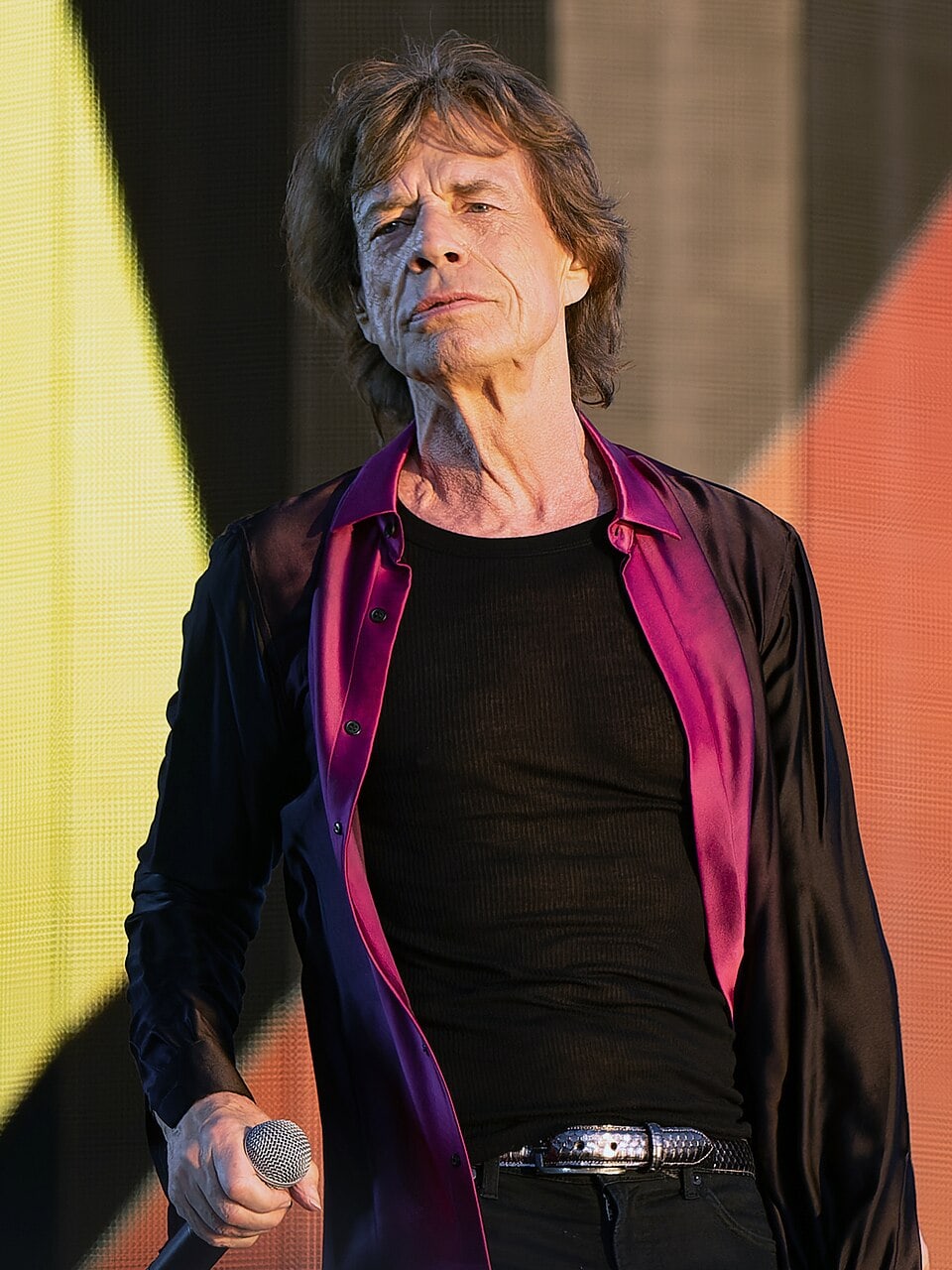
Front man of the longest touring band in the world.
Last updated Nov 7, 2026 · 6 min read
Estimated net worth
$500 Million
USD · As of November 5, 2026
- Source of wealth
- Rolling Stones touring, Jagger/Richards publishing, Solo records, Property portfolio, Merchandising and licensing
- Nationality
- United Kingdom
- Estimate
- Net Worth Watch estimate
What is Mick Jagger’s net worth?
Mick Jagger is worth an estimated $500 million as of 3 November 2026. The figure covers his share of the Rolling Stones touring business, royalties from a songwriting catalogue built with Keith Richards, income from his solo records and a property portfolio assembled over six decades.
The engine of the fortune is the stage rather than the studio. The Stones have toured in every decade since 1962, and the stadium runs of the last thirty years produced the largest payments of his career. The publishing catalogue sits alongside them and pays every time a song is streamed, licensed for film or covered by another artist.
The total is an estimate, not an audited balance sheet. No public filing discloses his stake in the band's companies, and royalty splits and touring costs are private. The number is assembled from reported tour grosses, known contract terms and published estimates of the catalogue value.
How the fortune was built
Jagger was born in Dartford, Kent, in 1943 and grew up in a comfortable household, the son of a teacher. He and Keith Richards were schoolboys together in the town, and they met again by chance on the railway station platform in the early 1960s.
The Rolling Stones formed in 1962 and played their first London club dates that year, a rhythm and blues group modelled on American records. A recording deal followed in 1963, and early singles and a first album placed them inside the British beat boom. The money at that stage was small and controlled by a manager.
The change came when the band was pushed to write its own material. (I Can't Get No) Satisfaction in 1965 gave the Jagger/Richards partnership a first American number one, and from then on the royalties had two authors rather than one. A run of late 1960s albums turned a singles act into a global brand.
The next step was business rather than music. In 1971 the band began releasing records on its own label through a distribution deal, keeping more of each sale. Leaving Britain for tax reasons took him to France, where parts of the 1972 album Exile on Main St were recorded.
Solo work followed in the 1980s, with a first album in 1985, but the main asset stayed the band. The Steel Wheels tour in 1989 restarted large scale touring after a pause, and each cycle after it, through the 1990s and into the 2020s, was bigger in receipts. Hackney Diamonds in 2023 and the dates that followed kept the machine running.
Assets and holdings
The money is concentrated in three places. The first is his interest in the Rolling Stones as a business: touring receipts, merchandising and recording income flow through companies the band controls, and each member holds a share.
The second is the publishing catalogue. Songs written by Jagger and Richards are among the most licensed in popular music, and those royalties are split between the two writers rather than shared with the whole band. The estimate treats the rights as still owned and still earning rather than sold for a lump sum.
The third is property and cash: homes in England, France, the Caribbean and New York reported over the years, plus a conventional mix of investments. No holding company publishes accounts, so the split between these buckets is inference.
Income and the scale of the operations
In a touring year the Stones operation is one of the largest in music. A stadium run sells out across continents and grosses are reported by the trade press in the hundreds of millions. His personal income is a share of that after promoters, production, crew, freight and tax.
In a year without a tour the income is royalties, merchandise and licensing, a much smaller but dependable stream. Solo records add little by comparison. Recorded music works as marketing for the stage more than as a profit centre, which is why the band's calendar has long been organised around touring cycles rather than releases.
Where the money went
The largest deductions have been structural. British tax rates in the early 1970s were steep enough that he left the country, and much of that decade's income was earned and held abroad as a result. Managers, promoters and lawyers took a percentage at every stage.
Touring absorbs most of what it earns. A stadium production carries a crew of hundreds, freight between continents and a stage built for one cycle, so the net is far smaller than the gross. A large household and a divorce took further slices. What remained went into property, art and long term holdings rather than new ventures.
What the records actually show
Tour grosses are the firmest leg. Box office figures are published by trade outlets, and the pattern of the last three decades is well documented, even if the split behind them is not.
The catalogue value is softer. It is estimated from comparable sales and royalty streams rather than from a transaction, because no sale at a confirmed price has converted the Jagger/Richards publishing into cash. His stake in the band's companies is not disclosed anywhere.
The $500 million total is therefore a reasonable figure built on partial evidence. The documents that would settle it, company accounts and royalty statements, stay private.
How that compares
The nearest comparisons on this site are Paul McCartney at an estimated $1.3 billion and Elton John at $700 million, both as of 3 November 2026. Jagger sits below both.
Touring does not explain the gap, since on receipts the Stones match either of them. Ownership does. McCartney controls a large publishing catalogue of his own and a share of the Beatles business, while Jagger's songwriting income is split with Richards and the band's earnings with three other members. The same scale of success, divided further, produces a smaller personal total.
Net worth milestones
- 1943: born in Dartford, Kent, and raised in a comfortable middle class household.
- 1962: the Rolling Stones form and play their first London club dates.
- 1965: (I Can't Get No) Satisfaction becomes a first American number one.
- 1989: the Steel Wheels tour restarts stadium touring after a long pause.
- 2003: knighted for services to music, decades after the first hit.
- 2026: net worth estimated at $500 million in the current valuation.
Legal history and later life
His legal history is thin for a career this long, and almost all of it dates from the 1960s. A 1967 drug raid at a country house led to convictions that were quashed on appeal, the best documented courtroom episode of his life. The free concert at Altamont in 1969 ended with a death in the crowd and a long inquest, though no charge followed for the band.
Since then the record shows libel and copyright disputes settled or dropped, and no reported commercial judgment, insolvency or public settlement against him. Later life is still working life: he has toured into his eighties, released the band's first album of new songs in nearly two decades in 2023, and kept production work going between cycles.
Frequently asked questions
Is Mick Jagger a billionaire? No. His net worth is estimated at $500 million as of 3 November 2026, well short of one billion. The gap is explained by how Stones income divides: songwriting royalties are shared with Keith Richards and the touring and recording business with the other members, so a very large gross becomes a smaller personal total.
How much does he make from Rolling Stones tours? Nobody outside the band's advisers knows. Stadium tours gross hundreds of millions, according to trade reports, but promoters, production, crew, travel and tax come off the top, and the remainder is split among the members. His share is reported to be the largest, reflecting his role as singer and co-writer.
Does he own the Rolling Stones songs? He co-owns the publishing with Keith Richards, which is why the pair are credited as authors of nearly every Stones original. The catalogue has not been sold at a confirmed price, so the estimate counts it as an asset still earning royalties rather than as cash already banked.
How much did Hackney Diamonds earn? The 2023 album was the band's first of original material since 2005 and sold well for a late career record, but recorded music is a small part of the money. Its real value was as a reason to tour, and the dates that followed produced far more income than the album itself.
Is he still touring? The band has stayed active through the 2020s, with the Hackney Diamonds cycle following the anniversary dates of 2022. Jagger keeps to a fitness routine that lets him headline stadiums in his eighties, and no farewell tour has been announced. The band has given no sign of scaling back its schedule.