Jay-Z Net Worth
Brooklyn rapper turned brand owner
Last updated Nov 7, 2026 · 6 min read
Estimated net worth
$2.8 Billion
USD · As of November 3, 2026
- Source of wealth
- Armand de Brignac, D’Ussé cognac, Roc Nation, Music rights, Venture stakes
- Nationality
- United States
- Estimate
- Net Worth Watch estimate
What is Jay-Z’s net worth?
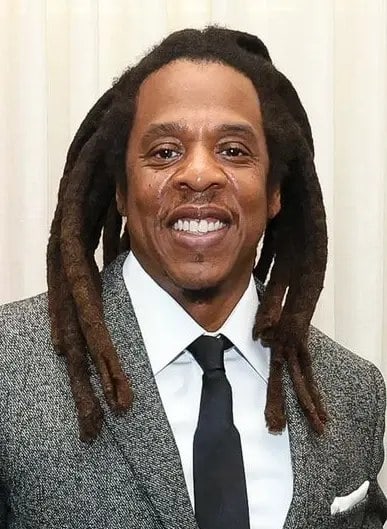
Jay-Z’s net worth is an estimated $2.8 billion on 3 November 2026. The figure follows the Forbes estimate published this autumn, which keeps him the wealthiest musician in the world and one of the few artists whose money comes mostly from businesses rather than recordings.
The composition matters more than the total. Music rights and touring are one layer. The larger layer is corporate: a stake in Armand de Brignac champagne, a share of D’Ussé cognac, the Tidal streaming service before it was sold, and a portfolio of venture positions taken early in companies that later became very large.
This is an estimate, not a balance sheet. Private holdings of this kind are never audited in public, and the value of a champagne brand or a venture stake moves with markets nobody can see.
How the fortune was built
Shawn Carter was born in Brooklyn on 4 December 1969 and grew up in the Marcy Houses in Bedford-Stuyvesant. He sold CDs out of a car and appeared on records as a guest before he had a label. In 1995 he founded Roc-A-Fella Records with Damon Dash and Kareem Burke, partly because no established label would sign him.
Reasonable Doubt arrived in 1996 to strong reviews and modest sales. The money started with the following albums, and by the early 2000s he was both a headline act and an executive. In 2004 Roc-A-Fella was sold to Def Jam, and he ran Def Jam as president for three years, a period that put him inside the corporate structure of the industry rather than outside it.
The pivot came in 2008, when he and Live Nation created Roc Nation, a wider entertainment company covering management, publishing and touring under a long term deal reported at around $150 million. That deal converted fame into a corporate vehicle.
The brand investments followed. He took a stake in Armand de Brignac, the champagne known as Ace of Spades, and in 2021 sold half of it to LVMH. D’Ussé cognac, launched with Bacardi in 2012, became a spirits business with his name on it rather than an endorsement fee.
Assets and holdings
The largest disclosed pieces are consumer brands. Armand de Brignac, in which LVMH bought a 50 percent stake in 2021, values the champagne house on a multiple of sales that would be unusual for a drinks brand with its volume. D’Ussé sits inside a joint venture with Bacardi.
Streaming and technology form a second layer. He bought Tidal in 2015 and sold it to Square, now Block, in 2021 in a deal valued at $297 million, receiving shares as well as cash. His venture positions, including an early stake in Uber and various smaller companies held through Marcy Venture Partners, add an equity book that is not publicly itemised.
Music rights, publishing and the Roc Nation business sit underneath. Property includes homes in Los Angeles and New York, and the art collection he and Beyoncé have assembled is considerable, though never valued publicly.
Income and the scale of the operations
Income arrives on three schedules. Recorded music and publishing pay royalties, with catalogue value rising as streaming made old records valuable again. Touring pays in bursts: the On the Run stadium tours with Beyoncé and the 2018 Everything Is Love run were among the highest grossing of their years.
Brands pay differently. Champagne and cognac produce profit distributions when the joint ventures perform, not annual fees. Roc Nation earns management commissions, publishing income and event revenue, and its roster extends well beyond music into sport.
The smallest stream is the one most people picture, which is a rapper being paid for verses. It has been years since that mattered to the total.
Where the money went
Tax has taken a substantial share. Federal, state and city tax on touring and royalty income in New York is heavy, and the 2021 brand transactions triggered capital gains.
A large part of the money went back into ownership. Buying half of a champagne house, funding a streaming service and holding venture positions all required capital that could have been spent instead. That pattern, reinvesting in equity rather than consuming income, is the reason the estimate is measured in billions.
Personal spending is visible but modest relative to the total: property, art, security and the staff required to run a household of that size. Philanthropy runs through the Shawn Carter Foundation, which funds scholarships, and through criminal justice work.
What the records actually show
The strongest evidence is corporate rather than personal. LVMH discloses its acquisitions and stakes; the Armand de Brignac transaction is documented. Block reported its purchase of Tidal, which establishes the exit price for that asset and the share consideration paid.
Bacardi is private, so the D’Ussé joint venture has no published balance sheet, and the venture portfolio is disclosed only when he chooses to speak about it. Court filings, notably the 2024 litigation involving a former business partner, have revealed fragments of deal terms that were otherwise private.
What cannot be verified is the split between brand equity, music rights and cash. Any estimate of that mix is inference, which is why the number should be treated as an order of magnitude.
How that compares
Against Dr. Dre, also on networth.watch, the difference is timing. Dre’s largest single gain came from selling Beats to Apple in 2014, a one-off exit that converted a private company into cash. Jay-Z has never had one comparable liquidity event; his fortune is a collection of smaller positions that compounded.
Against P. Diddy, the structure is similar, both built on brands and equity rather than record sales, but the outcomes diverged sharply after 2023. Against a touring artist such as Beyoncé, whose earnings are performance driven, Jay-Z’s income is ownership driven, which is why his figure is less volatile.
Net worth milestones
- 1995 Roc-A-Fella Records founded with Damon Dash and Kareem Burke.
- 1996 Reasonable Doubt released, the start of the catalogue.
- 2004 Roc-A-Fella sold to Def Jam, where he becomes president.
- 2008 Roc Nation created with Live Nation.
- 2015 Tidal acquired for a reported $56 million.
- 2021 Half of Armand de Brignac sold to LVMH; Tidal sold to Square.
- 2026 Estimated at $2.8 billion, the highest figure for any musician.
Legal history and later life
His legal record is mostly commercial. A 2005 assault charge in New York was resolved with a plea to a misdemeanour. In 2018 a dispute with a licensing company, Iconix, over a trademark deal went to arbitration, and the panel issued an award against him that he later contested; the matter was settled.
More significant was the 2024 civil case brought by a former business partner over the sale of his clothing brand, which produced filings that disclosed parts of his deal history. The case was resolved without a trial.
In December 2024 he was named in a civil lawsuit connected to Sean Combs; he denied the allegation, sought to have the claim dismissed, and no finding has been made against him. He continues to run Roc Nation, and his public role now is closer to that of an owner than a performer.
Frequently asked questions
How much is Jay-Z worth in 2026? We use an estimated $2.8 billion as of 3 November 2026, following the Forbes figure published this autumn. The total is built from brand equity in champagne and cognac, music rights, the proceeds of the Tidal sale and a portfolio of venture stakes. It is an estimate, because none of those private holdings is publicly audited.
Is he the richest musician in the world? By published estimates, yes. Paul McCartney, also on networth.watch, holds a large catalogue and a touring business, but his wealth is concentrated in music rights rather than consumer brands. The difference is that Jay-Z owns equity in companies that sell products unrelated to recordings.
How did he make most of his money? Not from records. The two largest single events were the sale of half of Armand de Brignac to LVMH and the sale of Tidal to Square, both in 2021. Before that, Roc Nation turned him from a performer into a company that manages other performers.
Did he own Tidal outright? No. Tidal was bought in 2015 by a group of artists led by him, each holding a share, and it was sold to Square in 2021 in a transaction that paid with stock as well as cash. His personal proceeds depended on his stake, which was never published in detail.
What does he still earn from music? Royalties from a catalogue that streaming made valuable again, plus publishing income from songs he wrote for others. It is steady but small next to the brand holdings, and it is the part of his wealth most exposed to changes in how streaming pays artists.